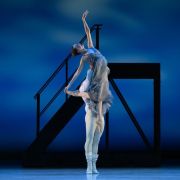
Opera Ballet Vlaanderen confirmed its status as a leading contemporary dance company with a formidable triple bill, technically demanding for both dancers and orchestra. The programme brought together a recent work by Shahar Binyamini, Boléro X, the world première of La Valse by Nacera Belaza, and Pina Bausch’s legendary Le Sacre du Printemps.

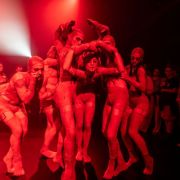
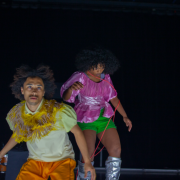
Shahar Binyamini’s choreographic style is often described as feline and fiery – an apt characterisation of Boléro X, set to Ravel’s music. First created for Ballet BC in 2023, the work has now been adapted for Opera Ballet Vlaanderen. In the foreground, soloists and couples alternate feline steps with sinuous, almost serpentine movements, repeatedly punctuated by sharp, jerky accents. Behind them, the rest of the ensemble pulses as a single, ritualised body, arranged in a semicircle along the back of the stage.

As Ravel’s notorious crescendo unfolds, the movement steadily intensifies, culminating in an apotheosis of striking collective impact. This effect is further amplified by the presence of more than fifty dancers on stage, made possible through the participation of the Junior Ballet and the Royal Ballet School of Antwerp. Binyamini’s costumes are neutral and identical for men and women: a skin-toned upper body paired with leather-like stretch trousers marked by a V-shaped front, accentuating the dancers’ elongated lines. This chromatic restraint, the circular spatial arrangement and the overall abstraction, recall the mythical work of Béjart; yet the latter’s refined sensuality is here replaced by visible exertion and audible gasping, further emphasised by dark lipstick and open mouths.


In 1926, at the Antwerp Opera, the Russian ballerina Sonia Korty, a founding figure of dance in Flanders, was entrusted by Maurice Ravel with the choreographic staging of La Valse for her company. The score famously deconstructs the Viennese waltz, breaking with bourgeois tradition as it evolves from a fragmented opening into a whirlwind of dissonance.
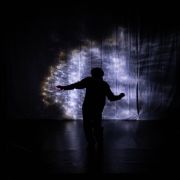
Almost a century later, Nacera Belaza offers a comparable sense of astonishment in her original creation for the remarkable dancer Austin Meiteen. The choreographer’s autodidactic trajectory is evident both in the singularity of her movement language and in the overall conception of the piece. Dressed in a dark suit, Meiteen traces circular, repetitive, almost hieratic movements, delicately poised between balance and imbalance, poetic and unpredictable, recalling the gestures of a tightrope walker. Above him, a trembling beam of light, masterfully designed by Éric Soyer, suggests a gathering storm, echoing the music’s percussive accents. In the final moments, the lights fade, leaving the theatre in total darkness. Belaza’s explicit intention is to place dance and music on an equal footing; yet at times the overwhelming force of the score threatens to overshadow the choreography itself.

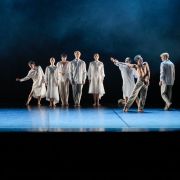
Pina Bausch’s Le Sacre du printemps is where the Opera Ballet Vlaanderen dancers shine at their best, doing full justice to their extraordinary expressive and artistic capacities. The performance was visceral, grounded and powerful. The contrast between the sexes was sharply articulated, generating moments of genuine anguish. As is customary in Bausch’s work, this went far beyond mere interpretation the dancers became ritual agents before our eyes, their embodiment so complete and inseparable from the music that it seemed to surge directly through their bodies. Soloist Towa Iwase delivered a striking performance, from which visions and fears emerged with rare intensity, making her anguish feel painfully real.

In conversation afterwards, dancer Morgana Cappellari explained that répétiteurs from Tanztheater Wuppertal, working under the guidance of Barbara Kaufmann, adhere closely to the creative philosophy developed by Bausch herself: each human being must be allowed to shine as they are, bringing their own nature and personality onto the stage. This principle was fully embodied in the performance, allowing each dancer’s individuality to emerge with compelling force.


If the intention, as Tom de Jager explained after the soirée, was to keep the audience on the edge of their seats by offering a ballet that requires no prior study of the programme, this sense of spontaneity and direct connection was strongly felt throughout the evening. This was first achieved through the company’s visible cohesion which, as dancer Anaïs De Caster remarked, is forged throughout the creative process and sustained right up to the moment of stepping on stage.

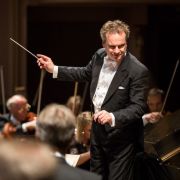
An equally decisive factor was the admirable performance of the Opera Ballet Vlaanderen Symphony Orchestra under the direction of Karel Deseure, which brought fully to life these three remarkable works, all shaped by the dense dance networks of the early twentieth century. Boléro, composed by Maurice Ravel for Ida Rubinstein and choreographed by Bronislava Nijinska, and La Valse, conceived in dialogue with the Ballets Russes and rejected by Sergei Diaghilev, later found choreographic life with Sonia Korty. Le Sacre du printemps, also born within the Ballets Russes’ orbit, emerged from the collaboration between Vaslav Nijinsky and Igor Stravinsky. What ultimately transpires is a programme in which modernity needs tradition in order to unfold.
Elsa's trip was funded by Opera Ballet Vlaanderen