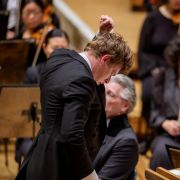
In his Saturday night recital at Carnegie Hall, Daniil Trifonov proved that an evening of unfamiliar works can be just as fulfilling, if not more so, than the standard repertoire. The four works artfully selected ranged from the virtually unknown to those undeservedly overlooked. The first half explored byways of the Russian repertoire in a fascinating trio of pieces that dated from the few years preceding the 1917 Revolution.

Sergei Taneyev is perhaps best remembered as teacher of Rachmaninov and Scriabin. His remarkably original Prelude and Fugue stands as the culmination of his devotion to Bach. Flowing and improvisatory, the Prelude was tinged with coloristic chromaticism and a distinctively Slavic flavor. An ecstatic climax offered the first glimpse of Trifonov’s formidable range, filling the hall with the rich tone he drew from the Steinway. In the breathless Fugue, the pianist conveyed the spiky counterpoint with clarity, sailing through its staggering technical demands, only to close in a tongue-in-cheek anticlimax.


Sergei Prokofiev’s Visions fugitives is a set of 20 kaleidoscopic miniatures, a study in concentrated expression with many fluttering by in under a minute. The beguiling title alludes to symbolist poet Konstantin Balmont who wrote of turning “fugitive visions into verse”. Trifonov didn’t approach these as mere trifles, but with intensity and flair, teasing out variety across the set.
Distinct from the mechanistic works the composer was writing at the time, Visions fugitives lean towards the lyrical and restrained, to which the pianist offered a sensitive, expressive reading. But nos. 4 and 14 erupted with ferocity, and the aptly marked Ridicolosamente crackled with wit. The closing piece was the most enigmatic, a ruminative meditation.
One barely had time to digest before Trifonov plunged into the dense chords that made the commanding introduction of Nikolai Myaskovsky’s Piano Sonata no. 2 in F sharp minor. Myaskovsky may be among the most prolific of underperformed composers, with an output that includes 27 symphonies, 13 string quartets and 9 piano sonatas. Rapid figurations in the bass took flight in this impassioned writing, leading to a chilling invocation of the plainchant Dies irae.

The richly chromatic textures suggested Scriabin, but cast in a distinctly original voice. In a bristling contrapuntal section, the plainchant was woven into the intricate textures to striking effect. I was captivated by the sincerity of Trifonov’s conviction in this music, and after a performance like this, I’m convinced it ought to be in the repertoire of more pianists.


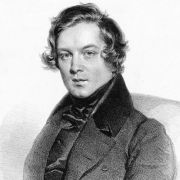
The latter half of the recital was devoted to another F sharp minor sonata, namely the First Piano Sonata of Robert Schumann. Though Germanic and predating the Russian pieces by some 80 years, the brooding and passionate qualities of this work ensured a fit with the temperament of the larger program. The opening was arresting with its undulating bass line underpinning pointed gestures in the right hand. This was music of extremes: wild and untamed with impetuous leaps across the keyboard, Trifonov thrillingly seemed to teeter on the edge of control, only to retreat to a delicate lyricism.
The Aria that followed made for a dreamy interlude, contrasted by the exuberant character of the Scherzo — and I particularly loved the rhythmic swagger the pianist gave to the central Intermezzo. The wide-ranging finale returned to the fantasy element of the opening, and Trifonov enthralled with a dazzling variety of colors and a nearly symphonic heft, building a to powerfully virtuosic coda.
Three brief encores followed, all by Tchaikovsky (extracted from Sleeping Beauty and Children’s Album). Light but charming, they made for a whimsical foil to the torrent unleashed.