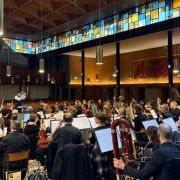
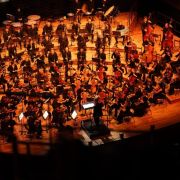
Since 1994, Celtic Connections has been brightening the dark Glasgow Januaries, growing from humble beginnings to a 300-event festival with over 1,200 artists performing across 25 venues. The festival is a diverse musical palette from traditional folk, to world music with international artists often bringing performers together to create one-off events.

It is 50 years since Henryk Górecki composed his Symphony no 3, “Symphony of Sorrowful Songs”, a deeply meditative work that has found fame in numerous soundtracks. A timely 1992 recording coinciding with the launch of the radio station Classic FM resulted in worldwide fame, yet for a work which sparks instant recognition, it is not often performed. Moving away from 1960s avant-garde serialism towards harmonic minimalism, Górecki was inspired by three sorrowful songs: Mary, mother of Jesus lamenting her son, 18-year-old Helena Wanda Błażusiakówna’s prayer scrawled on a Gestapo cell wall in the Tatra Mountains and a Mother seeking her missing son after the Silesian uprisings.


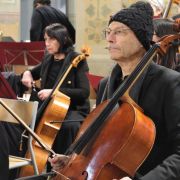
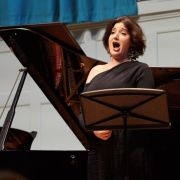
It is a piece which can test the patience as each of the three movements are slow with minimal harmonic variation and yet it does cast a mesmerising spell with each string section split into two divisi parts producing a dense tapestry of sound. Conductor Pawel Kapula judged the pace of the long first movement with its ten-part canon growing from double basses and slowly spreading across the players. Francesca Chiejina’s radiant soprano took up Mary’s short lament, opening up from quiet beginnings to a glorious climactic crown, the trombones adding splendid central heft before the music unwound in the strings mirroring the opening down to the basses, the piano adding soft chimes.
The famous central movement was mesmerising and beautiful, piano and harp adding ethereal presence. Chiejina’s rich timbre turned soulful for Helena’s prayer, not of protest at incarceration, but for her mother whom she knew would be distraught. Strings were quietly intense for the final song, Where is my beloved?, Chiejina finding the darkness in the mother’s search for her missing boy. Four flutes added poignancy as the strings rocked slowly to and fro between chords, the final text calling on the birds to sing and the wild mountain flowers to bloom so the boy may sleep a happy sleep.

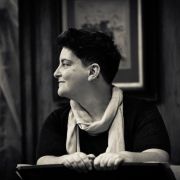
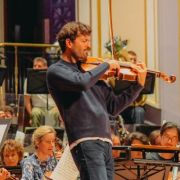
Making this a one-off event, Celtic Connections approached jazz singer and composer Alice Zawadzki to create a suitable playlist to introduce the Górecki. With improvising pianist Bruno Heinen and George Crowley on a haunting bass clarinet, the sound world was gentle and flowing. Zawadzki opened with her version of the final Sorrowful Song, her voice with its folky timbre mesmerising and hypnotic as the distraught Upper Silesian mother, softly striking a mountain goat bell. Picking up the violin for a song written by her grandmother on the outbreak of the Second World War, Zawadzki’s tone became more keening as the clarinet breathed long soft notes and piano becoming more animated as the pace picked up. A moralistic song about a daughter running away to dance with the Hussars and why you should listen to your mother had Crowley’s bass clarinet moving from rhythmic to elegiac, Zawadzki in full chanteuse mode. I loved the final wordless song, inspired by Zawadzki’s arrival at a tiny Danish island, the grey land and sea suddenly lit by a pink sunrise. Zawadzki’s violin shimmered, piano and clarinet lyrically inventive as Zawadzki’s voice like a North Sea siren, saluted the growing light. I had my doubts at first, but I rather loved this thoughtful collection.