

Some 20 years ago, guest soloists and conductors at a Singapore Symphony Orchestra concert would mostly come from Europe or North America. The scene has however rapidly evolved, with Asian and Asia-born musicians sweeping prizes and awards at international competitions worldwide, such that visiting Asian artists are becoming more of a norm.

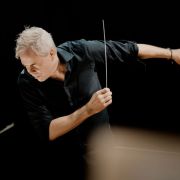
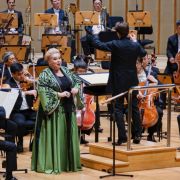
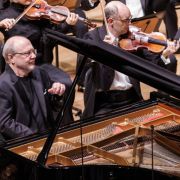
This latest SSO concert was helmed by Macao-born Lio Kuokman, Music Director of the Macao Orchestra and resident conductor of the Hong Kong Philharmonic. His very impressive conducting debut opened with South Korean composer Unsuk Chin’s subito con forza (2020). This five-minute work was written for the 250th anniversary of the birth of Ludwig van Beethoven, its Italian title translating to “suddenly with force”. Its first two emphatic chords were based on the opening of the German’s Coriolan Overture but with trailing percussion. Amid scurrying string runs and wind outbursts, there were further references to other Beethoven works including the Fifth Piano Concerto (with Beatrice Lin in the demanding obbligato piano part), the Fifth Symphony and Leonore overtures before devolving into a peaceable C major chord.


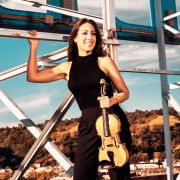
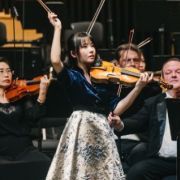
Taiwanese-American violinist Paul Huang, who had previously performed chamber music here and Tchaikovsky’s Violin Concerto with the Orchestra of the Music Makers, made his SSO debut in Antonín Dvořák’s Violin Concerto in A minor. Underrated compared with his Cello Concerto, there is still much to say in the music. On a 1742 Guarneri del Gesu, Huang exuded a big tone, rich with vibrato and easily filling the hall. Cutting through thick orchestral textures, he made its narrative sound positively vital from the very first entry. Technique and intonation were spotless, and he had the instrument singing in the slow central movement. The finale was a joyous romp, like Brahms with a Slavonic accent, bringing the concerto to a brilliant close. Acknowledging vociferous applause, his encore of Fritz Kreisler’s Scherzo-Caprice (without its preceding Recitativo) was just as eagerly received.

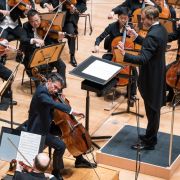
The Beethovenian spirit of abrupt surprises continued in the concert’s second half with his Symphony no. 7 in A major, which itself opened with a loud resonant chord. Conducted from memory, Lio presided over a taut and cogent performance. The first movement’s extended introduction was steadily built up and the ensuing Allegro (marked Vivace) was let loose with urgency and purpose. There being no true slow movement, the Allegretto variations were allowed to unfold majestically. Beethoven’s first audience in 1813 Vienna had been so enthusiastic in its acclaim that it had to be repeated on the spot. On this occasion, the well-behaved audience was stunned into silence.


The last two movements were fast and faster. The kind of demand Robert Schumann would later exact on his interpreters, prestissimo possibile, later schnell and few moments noch schneller, definitely applied here. The musicians responded accordingly, driving the work with an accuracy which still seems almost implausible at that kind of speed. Exhilarating and breathlessly exciting are par for the course for modern professional orchestras today. Richard Wagner had famously hailed this as the “apotheosis of the dance”, but seriously nobody was going to dance to that.