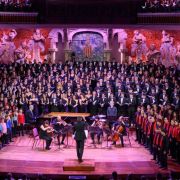
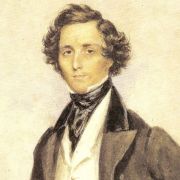
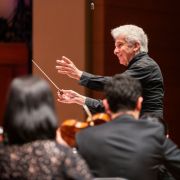
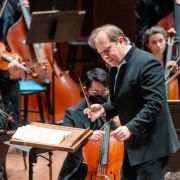
Admirers of Felix Mendelssohn relished an enchanting April evening of his works by the Seattle Symphony, in which the infrequently heard Three Motets for female chorus were bookended by The Fair Melusina and his complete incidental music to Shakespeare’s A Midsummer Night’s Dream. Conductor Nicholas McGegan, sans baton for the entire performance, alternated between high energy and deep expressivity.

Mendelssohn considered Die schöne Melusine the most perfect and melodious of his concert overtures, although he could not have anticipated Wagner’s appropriating the upwardly curling ‘water sprite’ configurations to portray the Rhine in his first Ring opera. McGegan provided clarity and space to breathe, allowing the music to flow as a river should do, his enthusiasm infectious.


The sheer beauty of the Three Motets, for female chorus, belies critic Eduard Krüger’s insistence that Mendelssohn’s religious music “will have faded from view” in a generation. These exquisite pieces were inspired by the composer’s 1830 visit to the Trinità dei Monti church atop the Spanish Steps in Rome, where he heard a group of French nuns singing. Though seeing them was not allowed, Mendelssohn found their voices memorable. The resulting three-movement gem combines Latin verses, psalms and hymns: Veni Domine, Laudate pueri and Surrexit pastor bonus. The soaring Upper Voices of the Seattle Symphony Chorale beautifully reflected the nuns’ purity of voice. McGegan subtly captured Mendelssohn’s mastery of Romantic-era melodic sensibilities and lush harmonies with a sensitive interpretation and expressive gestures. The voices of soprano Ksenia Popova and mezzo-soprano Sarah Larsen were well matched and displayed elegance in the Laudate pueri.
“He wrote it at seventeen, and how finished the form is already!” Wagner declared of the overture to A Midsummer Night's Dream. In this work of youthful inspiration, often played as a stand-alone, McGegan combined refinement with drama, recreating the composer’s magical transparency and supernatural airiness. He brought out the contrast between the delicacy of the fairies’ escapades, poetic lyricism of the romantic couples, and brash braying of the tuba and strings, adding his own exaggerated gestures to portray Shakespeare’s key comic character, Bottom.


Composed for an 1843 production of the Shakespeare play, the complete incidental music merges the composer’s mature genius with his vivid imagination. It was a rare pleasure to hear irresistible pieces such as Marcia funebre and Dance of the Clowns, interspersed with the familiar Scherzo, Intermezzo, Nocturne and Wedding March. All were nicely balanced by McGegan, from the spiritedness of the Scherzo and related L'istesso tempo to the urgency of the Intermezzo and the jolly entrance of Bottom and the Mechanicals.
Ye Spotted Snakes (with soloists and choir) and the Finale gave further opportunities for Popova and Larsen, charmingly accompanied by the Chorale, to regale the audience with their buoyant voices. Popova’s high notes sparkling. The French horn principal played with lovely tenderness in the Nocturne. McGegan’s energetic gestures helped create an exultantly played Wedding March. The orchestra, with razor-sharp playing from the strings in the overture, sounded magnificent.
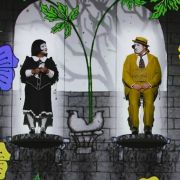
Deftly spoken dialogue from Shakespeare’s play with narrators Julie Briskman and Ryan Higgins enhanced Mendelssohn’s fanciful score. Although overlong, and excessively melodramatic in the Pyramus and Thisbe mini-play, the audience found it highly entertaining. The angelic sound of the Chorale added extra pleasure to the evening, the highlight of which was McGegan’s joyful conducting.