Amelia Freedman, the founder and Artistic Director of the Nash Ensemble, died aged 84 in last June. This Memorial Concert was given by the Nash Ensemble at Wigmore Hall, both the group and the venue closely associated with her distinguished career as an arts administrator. The Nash have been the resident chamber ensemble at the hall since 2010. Freedman also led Bath’s prestigious music festivals for some years.

This programme reflected Amelia’s own musical tastes, The works were among her personal favourites: the Ravel, Mendelssohn and Mahler featured in many Nash concerts over the years. But for modern mixed ensembles like the Nash, Ravel’s Introduction and Allegro for Harp, String Quartet, Flute and Clarinet, its instrumentation not always easily fitted into a concert, would be heard rarely. It doesn’t get out much even now, so its long-term championship by this group has been valuable. Ten minutes long, and as much a mini-concerto for harp as a chamber septet, it has a substantial virtuoso harp cadenza, played with glittering precision by Lucy Wakeford.


Then from septet to octet, but a complete change, as Mendelssohn’s String Octet in E flat major took us back to 1825, its precocious composer’s 16th year. The double string quartet scoring suggests chamber music but Mendelssohn’s score instructs the work to “be played by all the instruments in the style of a symphony”. Certainly that advice was followed by the Nash, who relished the rich textures, at times sounding like a full symphonic string section in the intimate Wigmore Hall acoustic. To the many faces of this exuberant work could be added that of a violin concerto, with its demanding first violin role so expertly despatched by Stephanie Gonley. Boy composer and seasoned performers combined to earn the cheer of the evening.
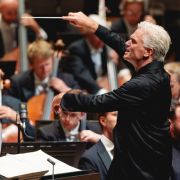
After the most orchestral of chamber works, we heard the most chamber-like of symphonic works, Mahler’s Fourth Symphony conducted by Martyn Brabbins. Iain Farrington writes of his expertly reduced version “This arrangement... aims to create a full orchestral picture from only 15 players using the instruments in Mahler’s score.” So it is odd his reduction lists a trombone (“or horn”), which does not appear in Mahler’s original. Here we heard the horn, which as played by Richard Watkins, was entirely effective throughout. Of course 15 players means an ‘orchestra’ of soloists, so constant exposure – nowhere to hide when the demands are not shared around instrumental sections. But Mahler often exposes his players to exceptional demands even in his full orchestral originals. And this is the Nash Ensemble, if not an army, at least a platoon, of Generals. We were treated to many wonderful solo contributions, and Philip Cobb’s trumpet shone, especially in the first movement. The opening of the Adagio asks for a divided cello section, but Adrian Brendel held the only cello onstage. His rapturous solo, ruhevoll and gesangvoll (peaceful and songful) as marked, descended on us like a benediction.


Perhaps Claire Booth was not in her best voice since, unusually, she did not make Mahler’s song in the finale sound fresh-minted. Here we had little sense of delight in the child’s view of the “Heavenly Life”, her sound muted and consonants not getting far into the auditorium. She had fared much better earlier in Helen Grimes’s striking song Long Have I Lain Beside The Water one of the more recent of the 330 commissions Amelia Freedman and the Nash have made. The Nash Ensemble will endure with Simon Crawford-Phillips and Adrian Brendel as joint Artistic Directors. What more could a founder desire?