Unusually, this year’s Flamenco Festival began in silence. No music, no singing or clapping, just the sound of the metal on Jesús Carmona’s shoes scraping on the floorboards in semi-darkness, audibly describing the arc of his legs as they swept out around him. It was both melancholic and surprising.

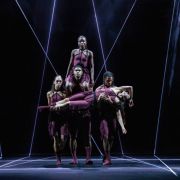
The impact was more powerful because Carmona was essentially faceless, the lighting just showing his darkened form like some mysterious masked marauder. Juanjo Hernández Trigueros’ lighting designs played a strong role in making the expression of pure flamenco in UnYdos even more powerful, creating separate areas in the stage, utilising blackouts and sharp, immediate illumination of a performer or group where moments before there had been none. In one sequence, Carmona jumped through a line of five spots. The finale had the headliner literally swallowed up in darkness as the spot above him gradually diminished so that just his fingers, held high above his head, were visible.


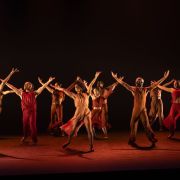
Although these effective theatrical lighting designs were far from the normal spectacular brightness of a tablao, the performances of Carmona and the five artists in his support came straight from the essence of that tradition and all were memorable.

Carmona has trembling feet, extraordinary rhythmic zapateado with the cadence rising and falling in harmony with his musicians. He sings with his feet. The world record for tap beats per minute is 1,163 (to save you the effort that’s more than 19 taps per second). It’s a record that has stood for fifteen years and seems unsurpassable but if Carmona put his mind to it then the Guiness Book of World Records might have to come calling! His extreme flamenco virtuosity is matched by an innate elegance and joy of movement.
For all the brilliance of Carmona, the dancing highlights were shared with a superb bailaora, Lucía Campillo who began her professional career with the renowned Antonio Gades Company and has also danced with Ballet Nacional de España. She could easily headline her own show, dancing with maturity, humour and sensuality, showing outstanding skills with both the mantón (a huge shawl with long fringed tassels), manipulating the heavy silk fabric with great upper arm strength and dexterity, and then showing similar lower body strength wearing the bata de cola (dress with a long, frilly train) moving the heavy material around with apparent ease to match her own rotations. At times the train whirled around her like a child’s roundabout given a heavy push. It was a masterclass in these challenging flamenco arts.

A hint of raw eroticism is a key ingredient in flamenco and both Carmona and Campillo projected this sex appeal through their flamboyant dress and steamy personas. Late in the 75-minute show, Carmona wore an open red tunic over a tight-fitting vest so translucent that it took me a while to realise that we weren’t seeing skin. Campillo’s flashing eyes and tremendous backbends provided a cocktail of sultry seduction.


The dancers were supported by four outstanding musicians, including the cantaor, Jesús Corbacho, a guest artist who sang with a formidable, yet graceful, power, strong emotional nuances and an immense vocal range. To my untrained ear, his voice sounds quite unique amongst cantaores. Singing is the root of flamenco and singing for dance is a little like conducting for ballet: purists can be prejudicial. But creating the right rhythmic adaptability when singing for dance is an extra skill beyond concert or competition singing and Corbacho has those qualities in abundance. Unsurprisingly, he has won just about every flamenco award going, including the prestigious Lámpara Minera (in 2024) and sings as naturally as he walks, perhaps also unsurprising since he was apparently singing fandangos with perfect tone at the age of two!

Two other cantaores, Francisco Blanco (Al Blanco) and Eleazar Cerreduela, added depth, power and variety to the vocal tapestry within which the dance flourished and José Manuel Martínez Muñoz (known as “El Peli”), at 28, still a comparatively young flamenco guitarist, showed great sensitivity in providing the only non-vocal instrumental contribution to the show. He is definitely an artist to mark for the future.

UnYdos is a Spanish play on words, meaning “one and two” as a reference to the rhythmic beat of flamenco, and (as “unidos”) the Spanish word for united, a metaphor for the essential joined-up nature of great flamenco. This group of six outstanding artists was unquestionably skewed towards a male presentation although Campillo was enough woman to balance the five guys. It was a stunning evening of pure flamenco artistry, enlivened by a tremendous sense of theatre, and augurs well for the rest of the festival, which continues until the end of June.