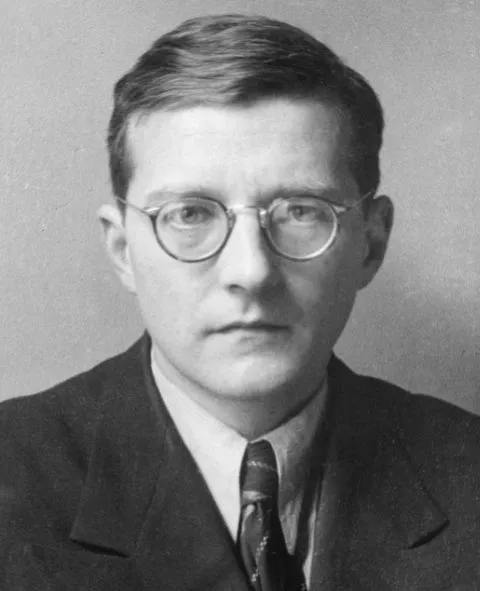
| Year of birth | 1906 |
| Year of death | 1975 |
| Nationality | Russia |
| Period | Early 20th century |


The leading Russian of the Soviet era, Dmitry Shostakovich was born into revolutionary times, but while his artistic course was contorted by the harassments of an authoritarian system, it never lost its moral or expressive integrity.
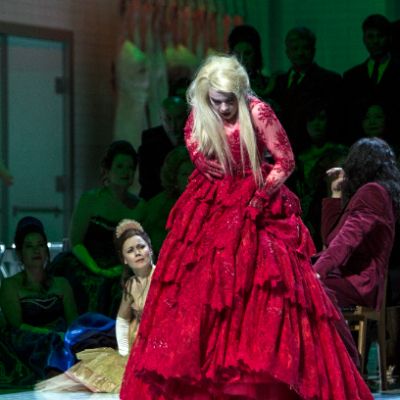
Born in St Petersburg, he was a gifted student who announced his talent and individuality to the public with his First Symphony at the age of 19. Less than a decade after the 1917 Revolution, the lively 1920s atmosphere of modernist experimentation was reflected in his brilliant, often satirical early scores. The mood changed, however, after musical activity was brought under state control; the grittily realistic opera Lady Macbeth of the Mtsensk District was denounced in Pravda in 1936 as ‘chaos instead of music’ and quickly disappeared from the repertoire. Shostakovich withdrew from performance the brooding Fourth Symphony he had just completed, offering up instead the more optimistic and conventional Fifth and presenting it as ‘a Soviet artist’s reply to just criticism’.
Thus, the cast for his subsequent troubled relationship with the system was set. To anger the authorities could be a fatal act, even for artists, and for the rest of his life Shostakovich would tread a fine line between the party orthodoxy of often-bland socialist realism on the one hand, and personal expression and cleverness (denounced as ‘formalism’) on the other. The two could be legitimately brought together in the patriotic fervour of the Second World War, especially in the Seventh Symphony, the ‘Leningrad’, whose grand-scale evocation of the besieged city’s resilience won international acclaim; yet a slip-up with the almost flippant mood of the Ninth, his first post-war symphony and considered not to be heroic enough, led to another round of criticism and withdrawal into irony and obfuscation as a method of self-preservation.
The death of Stalin in 1953 ushered in a period of relative artistic freedom, which Shostakovich began to exploit in works of stark outward expression such as the Thirteenth Symphony (1962), inspired by the wartime massacre of civilians at Babiy Yar, or the searing Fourteenth (1969). At the same time he invested intense intimacy of feeling into chamber music, above all in his string quartets – eleven out of his total of fifteen were composed after 1953.
Shostakovich’s output ranges acrsoss orchestral music (fifteen symphonies, plus six concertos), operas, ballets, film scores, chamber music, piano music and songs. But he will be remembered above all as one of the twentieth century’s greatest masters of the symphony – the genre whose broad human canvas seemed his natural idiom.
Profile © Lindsay Kemp 2025