At the Grimeborn Opera Festival, squeezed into the East End’s compact Arcola Theatre, orchestral reductions are the norm. The combination of piano, cello, double bass and sousaphone was my personal favourite (Gothic Opera’s Der Vampyr). With Studio 1’s balcony and the alcove beneath boarded up, space is at even more of a premium so it was a pleasant surprise to encounter an 11-strong ensemble – the excellent New Trinity Baroque – playing for Giulio Cesare in Egitto.

In the West End, Handel had in the region of 40-50 players at the opera’s premiere at the King's Theatre in Haymarket in 1724, but the only significant loss in terms of instrumentation here was the absence of horns, used sparingly, in any case, with one crucial obbligato exception – in Cesare’s “Va tacito”. Here, Mark Wilson gamely played it on the bassoon, sparring with countertenor Sandro Rossi in a jovial joust.


Led from the harpsichord by Predrag Gosta, the slimline period instrument ensemble (the first time I think I’ve seen both pitch and temperament – Vallotti – stated in a programme) filled the space with vibrant, nuanced playing. Leader Simone Pirri duetted sweetly with Cesare as the nightingale in “Se in fiorito ameno prato” and the sensitive basso continuo included a chitarrone. Kudos to Kate Allsop, violin doubling recorder, for making emergency running repairs when the co-leader snapped a string!

The drama itself was very much reduced, nearly four hours of music condensed to 165 minutes, including a single interval. Cleopatra’s disguise as ‘Lidia’ is excised, which helps propel the plot faster, but it does mean that the excellent Radoslava Vorgić hardly has any stage time in Act 1. Directed by Marcio da Silva (who also sings Tolomeo’s menacing henchman, Achilla), the production is minimalist, the props being a curved wooden throne and, in Act 1, an obelisk, papered in hieroglyphs at the photo call, but reduced to a frame by the second show.

Initially, the characters are in period costume – at close quarters, it triggers school assembly flashbacks – but during the course of the evening those costumes are sometimes removed to reveal contemporary black stagewear, perhaps reflecting characters’ inner thoughts. Masks are also donned and, in one of the staging’s more imaginative touches, four masked senators surround Caesar during Cleopatra’s victorious “Da tempeste” aria, stabbing him in the back; a little reminder that there was no ‘happily ever after’ for Handel’s title character.


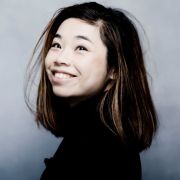
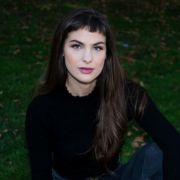
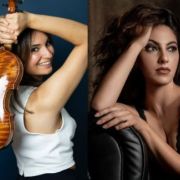
Vocally, it was a mixed bag. Although not without style, Italian-Belgian countertenor Sandro Rossi hurled himself at Cesare’s music forcefully, lower notes plummy. When scaling his voice back, there were some beautiful moments. Julia Portela Piñon sang Tolomeo with a clean, dark mezzo, if without much hint of a wild despot. Italian contralto Federica Moi certainly has an interesting voice. A pupil of Sonia Prina, her instrument is incredibly sonorous, almost baritonal, if heaving with excess vibrato. She portrayed Cornelia with immense dignity. Da Silva too often resorted to roaring as Achilla, unnecessary in this tiny venue.

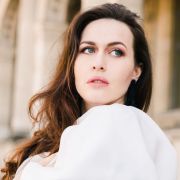
The most accomplished singing came from mezzo-soprano Silvija Radjen Kumar as a lively, supple-toned Sesto, and Radoslava Vorgić’s outstanding Cleopatra. The Serbian soprano has a silvery timbre, not unlike Sabine Devieilhe (high praise, thoroughly deserved on this showing) and sang with such consummate artistry that I lamented that only five of Cleo’s arias survived the directorial cuts. Her outer numbers had the necessary diamantine sparkle, but it was her poise in the slow arias that impressed the most, particularly a poleaxing “Se pietà” where, limpid-voiced, she locked eyes with the audience in her plea to the gods to protect Caesar in battle. Some of the best Handel singing I’ve heard in ages.