Nestled amid the constant rumble of Manchester’s trains and trams is one of the best-sounding concert halls in the UK: the Bridgewater Hall. Sat inside, it can be hard to remember just how busy the surroundings truly are. Built on a raised bed of isolated foundations, usually used for earthquake-proofing, when musicians aren’t playing, the interior of the hall is one of the quietest places in the city.

The hall’s acoustics are special – generous and transparent, with wood surfaces cradling the stage on all sides. While the exterior glassy façade could give a misleadingly harsh impression, the acoustic within is humanistic, granting performers’ sounds a distinctly ‘directed’ quality, not diffuse or echoing. Designed by architects Renton Howard Wood Levin, the £42m venue was completed in 1996, and is arguably the practice’s most advanced concert hall, with the entire structure being an isolated, sculptural entity, insulated from the outside world.
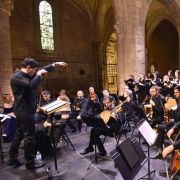
Home to two resident ensembles – the Hallé and the BBC Philharmonic – the Bridgewater Hall is one of the better places in the UK to listen to orchestral music. The hall hosts over 300 live events a year, from classical music and operas in concert, to films with orchestra, rock, jazz and pop. Chamber music is on offer too, and despite its symphonic size the hall is well attuned to quieter music: indeed, given its acoustic characteristics, the concert hall might be best suited to more delicate, unamplified performances.

The Bridgewater Hall itself was developed to replace the Free Trade Hall, a nearby mid-19th century building, the longtime home of Sir Charles Hallé’s concerts. Constructed on the site of the deadly Peterloo Massacre, the Free Trade Hall frequently hosted political meetings alongside musical performances. In 1905, suffragettes Christabel Pankhurst and Annie Kenney were once forcibly ejected after Sir Edward Grey, soon to be Foreign Secretary, refused to answer their questions on votes for women.
Unlike its predecessor, the Bridgewater Hall does not habitually host political public meetings – though party conferences are frequently held at Manchester Central convention centre across the tram tracks. But despite its acoustic isolation, the hall doesn’t feel detached from the rest of the city. The outside world does bleed in, especially during summer festivals. On the Saturday I stop by to hear a rehearsal, the city is in turmoil, police horses and public order teams everywhere as well as an intimidating phalanx of union-flag waving fascists of Britain First. (Manchester’s antifascist community movingly rose up to outnumber them.)


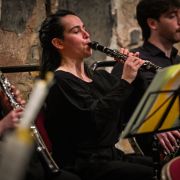
Yet within the hall the sirens and shouts are somehow completely inaudible. The BBC Philharmonic is rehearsing Berg’s Lulu Suite, itself a product of interwar turmoil and similar political rupture. Soon after, viola soloist Lawrence Power arrives to rehearse Cassandra Miller’s Viola Concerto I cannot love without trembling. This piece, inspired by writings of Simone Weil, emphasises even more the hall’s ability to become an acoustic sanctuary, as we meet the hushed rumble of massed strings, and the gentle echo of Power’s left-hand pizzicato.
With 2,341 seats in four tiers, the acoustics are good from most locations in the hall – my preference is around midway into the stalls, about row M. Hearing a rehearsal when stood in this row is about as good as I’ve ever heard an orchestra sound. But elsewhere, including the front part of the choir circle and the choir proper are excellent for those wishing to get a more direct view of the woodwinds, brass and percussion. Even from the stalls, where those musicians are masked by the strings, those sections of the orchestra remain powerful and audible. The evening’s performance of Prokofiev’s Romeo and Juliet is proof enough of the rich acoustic support the hall offers brass – a great benefit to the BBC Philharmonic’s especially wonderful trumpet section.

As well as these larger orchestral concerts from the Hallé and the BBC Philharmonic, the hall offers music at lunchtimes with chamber music series including Manchester Midday Music. There are also lunchtime organ recitals presented throughout the year, a great opportunity to hear the fine Bridgewater Hall organ in isolation. Events for young people are also held regularly at the hall, as well as behind-the-scenes tours.
On a more prosaic note, the Bridgewater Hall is an affordable concert venue, with low-cost tickets for young people, seniors and benefits claimants available for selected concerts by the Hallé, BBC Philharmonic and the International Concert Series. Close to transport links, including Manchester Oxford Road rail station, the hall has its own Charles Hallé Restaurant (open on concert nights only), but there are many other nearby options available in Manchester for pre- and post-concert food and drink.
Manchester beyond Bridgewater Hall
The city has a plethora of other music venues, including several dedicated to classical music. Hallé St Peter’s, the orchestra’s affiliated chamber music venue in Ancoats, to the east of the city centre, is worth keeping an eye on, with the Hallé’s chamber music series and other performances appearing regularly. The Royal Northern College of Music also has a busy concert season throughout the year, with prominent professional soloists making regular appearances alongside student performances. Smaller venues like the International Anthony Burgess Foundation also host chamber concerts, including contemporary music and free improvisation.

Independent concert series are run in venues across Manchester. Eroteme is one series, focused on acoustic and electronic contemporary music, presented in a variety of venues. Excellent food is also provided, making this concert series a well-loved regular fixture. Other independent series worth following include the Commission for New and Old Art, whose taste leans towards classic modernism. Select experimental music listings are available on Disconcert Manchester.
The Central Library sits close to the Bridgewater Hall, in St Peter’s Square, and is one of the city’s architectural icons, its round central reading room being one of the better places to wile away a loose rainy afternoon. Nearby, off Whitworth St, is arts centre HOME, which comprises cinemas, theatre and art gallery. Temporary and touring exhibitions, theatre productions and film festivals are to be frequently found at the centre. The city’s newest arts complex, Aviva Studios, is the home of Factory International, who run Manchester International Festival. Musical performances and theatre are on offer here, as well shows from stars of the art world, from Ai Weiwei to Laurie Anderson. Over the river in Salford lies MediaCity, the broadcast home of the BBC Philharmonic, and also of the Lowry Arts Centre, home to famous paintings by LS Lowry as well as other exhibitions, theatre, dance, opera, concerts and stand-up comedy.


Arguably Manchester’s best art space is Whitworth Art Gallery, which includes thoughtfully curated temporary exhibitions alongside an excellent permanent collection, focused on textiles as well as modern and contemporary art. The café, with striking views over the surrounding park, is excellent, and work spaces are available. Manchester Art Gallery in the city centre is likewise free to enter and has many temporary exhibitions, events and late openings. Castlefield Gallery is also a key location for contemporary art, as is ESEA Contemporary, a gallery focused on contemporary art from East and South East Asia, in the city’s Northern Quarter.
Home to a rich arts scene, a number of Manchester’s former mills are used as artists’ studios. These include Paradise Works and Islington Mill in Salford, Rogue Artists Studios in Gorton and Bankley Mill in Levenshulme – they can be one of the best ways for burgeoning art collectors to discover new artists. Online arts publication Corridor8 does a great job covering contemporary art across the north of England. The region’s independent publishing scene is also rich, with the Bound Art Book Fair held yearly at the Whitworth, and poetry and book events are regularly held at the Carlton Club and quirky bar and bookshop AD England (aka Peste), among other places.
Food and drink in Manchester
The city is of course full to bursting with restaurants, pubs and cafés, and so naturally one can only scratch the surface. Michelin-starred Mana and Skof are top choices for haute cuisine, with other notable contemporary British restaurants including Erst and Winsome, among many others. Manchester offers standout food at all price-points: Ethiopian-Eritrean restaurant Asmara Bella is recommended, as is Vietnamese joint Ca Phe Viet in Ancoats. Website Manchester’s Finest is an excellent resource for making sense of the city’s bustling food and drink scene.

Visitors to the Bridgewater Hall will likely want to know where to head for a drink before or after concerts. There is one standout option: the Peveril of the Peak on Great Bridgewater St, a perfectly proportioned small pub that is the go-to watering hole of musicians after concerts. If it’s too full, the Britons Protection, Cask or Sandbar are all recommended. Along the Bridgewater Canal, The Wharf is a great place to hang in the summer, brief as it can be here. Other recommended spots in the city centre include the Night & Day Café (a longstanding Northern Quarter institution), Corbieres basement bar, Café Beermoth and Salut Wines. But in truth you’re spoilt for choice.
See more information on the Bridgewater Hall.
See upcoming events in Manchester and Salford.
Web links
The Bridgewater Hall
Box office open Mon–Fri 10am to 5pm, Sat & Sun 2pm to 5pm.
Royal Northern College of Music
Open to the public for most events at lunchtimes and evenings.
Whitworth Art Gallery
Open Tues–Sun, 10am to 5pm, on Thurs to 9pm.
HOME
Open Mon–Sat, 10am til late; Sun 11am til late.
The Lowry
Open Tues–Friday, 11am til late; Sat & Sun 10am til late.
Aviva Studios
Open for events, check website for details.
Manchester Central Library
Mon–Thurs 9am to 8pm; Fri & Sat 9am to 5pm.
Closed Sunday and Bank Holidays
This article was sponsored by Bridgewater Hall.