

We’ve been chatting for a few minutes via video call when Jack Furness reveals he has some views a person in his position perhaps ought not to say out loud. “I really don’t know if I should say this…” Like any director, he’s thinking through all the possible consequences of the choice he’s about to make. Oh, what the hell. “Okay. Puccini. I’m so over it. I think he’s ruined everything.” It’s a controversial position, certainly, when you’ve just been added to the payroll of an opera house that has just opened Floris Visser’s production of La bohème.

But a large part of Furness’s new job at the helm of Welsh National Opera’s Boiler Room – a pioneering new research and development programme – is to ask difficult questions. About what people expect from opera, and what the art form might do differently. La bohème has a lot to answer for, allegedly. We’re talking contagion, and he doesn’t mean TB. “If you compare La traviata with La bohème,” he says, “Bohème doesn’t point to anything outside its own story.”
“The plot,” Furness says, “is just a vehicle for wringing some emotion from the audience, and in that sense it’s completely sentimental. And the success of that has made audiences accustomed to expect that from opera. If you look at other times in history when you see great operas being written, people don’t have that expectation that it should be cosy, sentimental and inoffensive. It’s infected our attitude to everything else. La Traviata is absolutely blisteringly angry as a work of art.”
“Cosy, sentimental and inoffensive” are not words that can be readily applied to Furness’s directorial output to date – a roster of shows with a heavy quota of ghosts and the uncanny: Hamlet, The Queen of Spades, Aci, Galatea e Polifemo. Not to mention Bernstein’s “unstageable” Candide – an immersive, site-specific production for Scottish Opera complete with articulated lorry and fornicating priests. Jack Furness doesn’t do trad.


“I think I’ve been making two types of shows,” he says, “Dark, gloomy, psychological, gothic; and chaotic, joyful and unhinged.” Gerald Barry’s The Importance of Being Earnest at Garsington this summer was definitely unhinged. “I didn’t know the piece very well,” he says, remembering the initial conversation about it with Dougie Boyd. “But I knew it had plate smashing in it and so obviously it was a yes.”

Vocally and physically demanding (chaise very longue, mud-wrestling) the show was a riot to watch, but must have been occasionally terrifying for the cast. “I think in many ways it’s my favourite show I’ve ever made. The cast were just this amazing, fearless group. I don’t think anyone said no to anything. There was this alchemy, which sometimes you get and sometimes you don’t. But we had it. The whole thing was de-professionalised, in a strange sort of way. Everyone came very well prepared, very respectful of each other – so professional in that sense – but it felt like a group of mates making show.”
Spring 2027 will see the return of Aci, by the River to Trinity Buoy Wharf Lighthouse, as part of the London Handel Festival. If you’re wondering into which category this one falls, Furness is clear. “Handel is batshit crazy. I mean the psychology of the characters, the perversion – it’s insane stuff and so intense. The three characters are locked in this obsessive, co-dependent power relationship and Handel seemed to love those.”
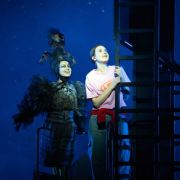
Talking of the dark side, Furness’ Flying Dutchman last spring for WNO was a moody transposition of Wagner’s gothic tale to a post-industrial Welsh port town. Staged at a dark moment for the company financially, bringing a ship of doom to dock so close to home might have looked like asking for trouble. But incoming CEOs Sarah Crabtree and Adèle Thomas were more than ready to take the risk on a director who refuses to play it safe.

Neither is he complacent about the sort of stories that opera tends to dish up over and over. The Dutchman, for example, wants a wife and it’s not going to end well. “You’re dealing” says Furness, “with a history of sexism and misogyny and it’s encoded in the stories themselves – I guess that’s partly what Katie Mitchell was talking about a year ago. We spend a lot of time thinking really carefully about the politics of particular creative decisions.”
Those decisions, he explains, could be anything from the vexed question of where one character stands in relation to another on stage, to how to undermine the story altogether. “In a book, you have this idea of the unreliable narrator. And I’ve got this personal challenge going on with how can you do that on stage. It’s really hard to suggest a provisionality on stage, to suggest to the audience that there might be anything else going on other than what they can actually see in front of them. So I’m constantly trying to unpick that to try and get a different perspective.”
The gothic vein runs deep. Furness’ current uncanny obsession is an adaptation of Dracula which he’s working on with the composer Ben Rowarth. It’s the layering of letters, diaries and documents in Bram Stoker’s novel that fascinates him, the idea that, just as with Oscar Wilde, there’s always another story hidden underneath the surface. “I can’t decide,” he says, “whether Stoker is terrified of sexuality and is encoding all this kind of crazy stuff in there, or if he’s much more intentional, operating on some level of critique of Victorian fear.”


Also with Rowarth he’s been busy with ‘Air Loom’, an audio puzzle based on the extraordinary life of James Tilly Matthews, the earliest recorded schizophrenic patient resident in Bedlam who got mixed up in an extraordinary story of diplomacy and espionage in revolutionary France. But all that will have to be kept at bay in the coming months as Furness has just taken the helm of WNO’s Boiler Room, a new opera and artist development initiative.
The prospect of doing all this in Cardiff, where he grew up, and now lives with his wife, the stage designer Hannah Wolfe, and their two sons, and in the very place he saw his first operas as a child is, he says, very exciting. He can’t say much about the details just yet. “But I can diagnose the problem” he says, with relish.
“If you look at the system that has produced masterpieces of the past, the ones we all adore, it’s a production culture and it rests on three things. You need a huge volume of shows, a high tolerance for failure, and a clear set of genre expectations that make it possible to write work quickly. And all of that is underpinned by an audience that is basically willing to turn up and sit through rubbish in order occasionally to get something better. We don’t have those criteria any more. We don’t have this ability to guarantee an audience for a high volume of new opera. And also, the audience is not willing in the same way to sit through rubbish like they might do on Netflix or whatever – we don’t have the same set of genre expectations.”

What happens instead, Furness says, is that once in a while there will be a commission for a new work which is expected to succeed without any of this supporting culture behind it, and with an immense pressure on that one show to do everything: bring in the audience, move them, prove to them that opera is still relevant and worth spending money on, inspire them to return in a year or two for another new opera. Being able to develop new work in house means the opportunity to work at scale, eventually developing new work for the main stage.
“Sarah Crabtree put it nicely to me the other day, so that future generations have options in terms of the pieces that they can programme. It’s about changing the canon, creating a new ecosystem, not just one new commission.” Operas in Welsh will be part of that mix, while the Bwlch Artist’s Pass scheme means local creatives get free access to dress rehearsals, and a chance to meet colleagues who might be interested in getting involved in making opera – “flinging the doors wide open,” Furness says. “I don’t think I’ve ever seen an offer like that from an opera company to the artistic community where it’s based.” Whatever emerges – whether uncanny, unhinged, or something else entirely – will surely be worth seeing.
Jack Furness’ production of Handel’s Aci, by the River runs from 15th–18th April 2027 as part of London Handel Festival.
See upcoming events and recent reviews from Welsh National Opera.