Alle sieben Jahre geht Philipp Stölzls geniale Inszenierung von Der fliegende Holländer in einem neuen Opernhaus vor Anker, in der Hoffnung, ein Publikum zu finden, das sie bedingungslos liebt. Zumindest fühlt es sich so an. Die Inszenierung des bayerischen Regisseurs legte 2009 erstmals am Theater Basel an, bevor sie an der Staatsoper Berlin (2013) und am Liceu in Barcelona (2017) Halt machte. Von Philipp M. Krenn neu inszeniert, legt sie nun am Theater an der Wien an, wo ihr – nach den begeisterten Reaktionen am Premierenabend zu urteilen – die Wiener zur Erlösung verholfen haben.

Stölzl verlegt die Handlung in die Entstehungszeit des Werkes und lässt sie in der Bibliothek eines wohlhabenden viktorianischen Gentleman spielen. Die mit Holzvertäfelung versehene Rückwand wird von einem riesigen Bilderrahmen dominiert, der eine stürmische Meereslandschaft zeigt. Im Mittelpunkt der Inszenierung steht Senta, die erstmals während der stürmischen Ouvertüre als traumatisiertes Kind zu sehen ist, das vor dem ausbeuterischen Verhalten ihres Vaters (Wilhelm Schwinghammer) und der strengen Mary (Ieva Prudnikovaite) flieht und Zuflucht in einem riesigen Folianten findet, der die Geschichte des Holländers erzählt.
Diese Zuflucht verwandelt sich in eine jugendliche Schwärmerei, die in der viktorianischen Gesellschaft als „Überreizung“ abgetan worden wäre, während sie sich danach sehnt, vom Holländer gerettet zu werden – vor dem Schicksal, mit dem von ihrem Vater ausgewählten Bräutigam verheiratet zu werden. Die junge Senta (Lina Lottes) bleibt während des ersten Akts auf der Bühne, in einen Ohrensessel versunken, während sich das Gemälde öffnet und Dalands Schiff erscheint, dessen Besatzung in Südwestern aus der Leinwand springt. Das Auftauchen des Geisterschiffs des Holländers ist grandios, sein Bug ragt inmitten eines spektakulären Wirbels aus Trockeneis durch den Rahmen.

Jordan Shanahans Holländer betritt heimlich die Bühne und erscheint zusammengesunken in demselben Sessel, in dem noch wenige Augenblicke zuvor Sentas Vater gesessen hatte – als wolle Stölzl den Holländer in Sentas aufgewühlter Psyche zu einer Vaterfigur verschwimmen lassen. Seine rechte Hand ist ein Haken, mit dem er den Globus in der Bibliothek durchbohrt, während er seine endlose Reise beklagt – dazu verdammt, auf der Suche nach einer liebenden Frau die sieben Meere zu befahren. Seine Zombie-Besatzung kommt direkt aus Fluch der Karibik.

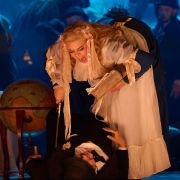
Im zweiten Akt wechselt die junge Senta mit der Sopranistin Ambur Braid die Plätze; sie trägt ein blaues Kleid und eine lange blonde Perücke und ähnelt Lewis Carrolls Alice, während der Frauenchor als Dienstmädchen auftritt. Stölzl sorgt für eine Überraschung, als Daland mit Sentas zukünftigem Ehemann auftaucht: Es ist nicht der Holländer! Stattdessen ist es ein alter Mann in Tweed, der an einer Zigarre zieht und Senta umwerben soll, die sich jedoch in ihre Fantasiewelt zurückzieht. Hier öffnet sich die Leinwand erneut und enthüllt – in einem Geniestreich – eine nachgebaute Bibliothek, in der die junge Senta mit dem Holländer erscheint, sodass sich ihr Duett parallel abspielt, wobei Lottes Braids Handlungen spiegelt. Als sich ein zweiter Bilderrahmen öffnet und eine dritte Bibliothek enthüllt – diesmal mit einem Sternenfeld, in dem die Möbel im Raum schweben –, befinden wir uns wirklich hinter Alices Spiegel.

Der Chor des dritten Aktes verwandelt sich in eine Hochzeitsgesellschaft. Senta trinkt heftig, während die Gäste ausgelassen feiern und Seiten aus Sentas Buch herausreißen. Die Zombie-Piraten verabschieden sie in einer Slow-Motion-Schlacht. Während Cameron Beckers Erik Senta anfleht, zur Vernunft zu kommen, zeigt die Leinwand den Bug des Schiffes des Holländers, wo seine geisterhaften ehemaligen Geliebten aus dem Unterdeck auftauchen. Senta schlitzte sich die Handgelenke und den Hals auf und opferte sich, um den Holländer zu retten, der mit der jungen Senta davonsegelt.
Das MusikTheater an der Wien hat eine fabelhafte Besetzung zusammengestellt, angeführt von Braids magnetischer Senta. Sie ist eine bemerkenswerte Bühnenpersönlichkeit, die sich voll und ganz in ihre Rolle hineinversetzt. Sie trug ihre Ballade mit mädchenhafter Ausgelassenheit vor, ohne ihre strahlende Sopranstimme jemals zu überanstrengen – was in einem Theater mit 1.100 Plätzen auch gar nicht nötig ist –, und setzte sich dennoch mühelos gegen die Wiener Symphoniker im Orchestergraben durch. In ihrer gewaltigen Konfrontation mit Beckers lyrischem Erik zeigte sie wunderbar ihre Verachtung, während ihre betrunkene Senta genüsslich den Degen schwang.

Shanahan ist ein echter Heldenbariton, und sein Holländer war grandios gesungen – dunkel und geheimnisvoll, wobei seine Stimme den Saal erfüllte, selbst von der zweiten Bühne innerhalb der Bühne aus. Schwinghammer dröhnte eindrucksvoll als Daland; sein Belcanto-Duett mit Shanahan verdeutlichte Wagners Anlehnung an Donizetti und Bellini. Der vielversprechende Tenor James Ley hinterließ als Steuermann einen kraftvollen Eindruck, während Prudnikovaite als Mary mit rauer Stimme streng auftrat. Wie immer ließ sich der Arnold Schoenberg Chor voll und ganz auf die Inszenierung ein; ihr ausgelassenes Gelage im dritten Akt war ein Triumph. Nur der Gesang des (mit Mikrofonen ausgestatteten?) Geisterchors des Holländers hinter der Bühne enttäuschte und klang bedauerlicherweise viel zu kraftlos, obwohl 16 Sänger aufgeführt waren.

Robert Jindra lotste das Orchester souverän durch Wagners stürmische Partitur, die nur gelegentlich durch einen Ausrutscher des Horns getrübt wurde. Das war der mitreißendste Holländer, den ich je erlebt habe. Hoffen wir, dass wir nicht wieder sieben Jahre warten müssen, bis er erneut an Land kommt.
Ins Deutsche übertragen von Elisabeth Schwarz.