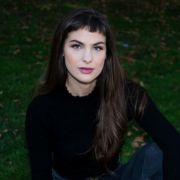
Scottish mezzo Beth Taylor trained at the Royal Conservatoire in Glasgow, was a finalist in BBC Cardiff Singer and has since been in increasing demand across Europe’s concert halls and opera houses. Her Edinburgh International Festival debut feels well overdue, so a busy Queen’s Hall audience ducked in from the glorious Edinburgh morning sunshine with keen anticipation to welcome her home at this recital with her friend and collaborative pianist Hamish Brown.

In a wide-ranging programme of music from mainly female composers, the theme was inspired by the sea and iconic female figures from myth, from the Lorelei to Cassandra and Medusa. The programme included two works written for Beth Taylor, one from Welsh composer Cameron Biles-Liddell and a specially written song cycle by Stuart MacRae receiving its world premiere at this recital.


Starting in the 12th century, the ancient antiphon from Hildegard von Bingen O Ignee Spiritus was sung from the back of the hall accompanied by a solitary drone, melismatic notes floating across the audience in a charged atmosphere. Then came two vignettes from Augusta Holmès: a yearning Pareil à la mer profonde had Taylor reaching for the deep monsters and climbing to the angels, which contrasted with a lively Le Vin, Brown’s piano rippling as Taylor wonderfully embraced the full dramatic chanteuse, drinking to the death. Lili Boulanger’s short pensive Reflets was all dreamy moonshine, Brown’s sensitive playing and Taylor pulling things back, cast a spell embracing the stillness.
Beth Taylor describes herself as a mezzo, but it’s a difficult voice to categorise as her dark, arresting low range is as resonant as her top notes are blossoming. She completely inhabits a song with purpose, passion and an extraordinarily dangerous edge where needed. The Breakers, a pair of songs from Cameron Biles-Liddell, showcased Taylor’s pallette, Storm was restless with percussive piano, Taylor almost growling as “dragon coils piled into a heap”, but then leaping to her top notes with agility. Twilight was gentler, sustaining long phrases with ease, poet William Sharpe’s yellow moon and dancing phantoms. Biles-Liddell also arranged the traditional Orkney folk song The Grey Selkie o’ Sule Skerry, Taylor drawing us quietly into the spell and then shocking us with the brutal, moving ending – quite the moment. Ethyl Smyth’s atmospheric Moods of the Sea showed Taylor’s colour range, embracing the maritime character, storytelling so vivid you could completely picture the moments just before a squall at sea where the sky meets the sea and the wind picks up, or the peace after sunset.


A beautifully phrased Schwanenleid from Fanny Mendelssohn and Clara Schumann’s shocking Lorelei, who sinks a boat onto the rocks, were highlights, followed by Connie Converse Cassandra Cycle, its pennies-to-gold fable a highlight. Germaine Tailleferre Pancarte pour une Porte d’entrée five short scenes were an enchantment, including the naughty Sainte Nitouche.
Composer Stuart MacRae and poet JL Williams set the Medusa story as five turbulent songs, a showcase recital climax for Taylor’s utterly fearless vocal and dramatic abilities with stormy mood swings from tense introspection to full-blown rage. Stepping into the role, violently scrunching up her hair, her voice swooped high and low in this challenging tour de force shocker. Williams’ gory words created a series of vivid images, Brown’s restless piano a wild base allowing Taylor to completely embody Medusa with the deadly snakes, her viperish new eyes waving in her hair.
An Alma Mahler Mahler encore calmed things down somewhat, but what a treat to hear Beth Taylor boldly striking her mark at the Edinburgh International Festival in the intimate Queen’s Hall.