

The RSNO Chorus Director Stephen Doughty, in his introduction, quoted conductor Christopher Seamen’s hefty benchmark for Verdi’s Messa da Requiem as 200 singers, as he pointed to the combined forces of his chorus and the Edinburgh Festival Chorus behind him. Performing together for the first time, over 220 of them packed the organ gallery promising to raise the roof of the Usher Hall in this popular choral colossus, British Sign Language expert Paul Whittaker conveying the drama throughout.

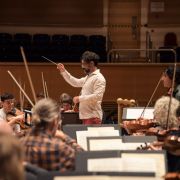
Conductor Patrick Hahn kept his forces tightly controlled for this operatic-scale work, finding clear focus in the choral passages, carefully balancing the orchestra with his soloists and allowing key instrumental moments to develop and shine. From the first moments of hushed cellos in the Requiem, the phrasing, tempos and contrasts were superbly managed throughout, developing an intensity which reached beyond the famous bombast into the spiritual.


The Kyrie introduced the finely sung quartet, operatically robust and vocally balanced, four horns adding depth as the full sound developed. For the chorus, warming up with some superb unaccompanied passages in the Requiem, the apocalyptic Dies irae arrived, the sheer choral force and the frantic sweeps of music in the orchestra with shrieking flutes and piccolo were hugely impressive and as awesome as the Day of Judgement should be. The brass was underpinned, not by the listed tuba (which Verdi dismissed as Bavarian nonsense) but by a splendid cimbasso, its gritty, punchy personality putting a memorable stamp on the Tuba mirum, and indeed throughout. With timpani pounding, the bass drum on a tilt for maximum volume, the off-stage trumpets high up in the top gallery thrillingly heightened the theatrical drama.
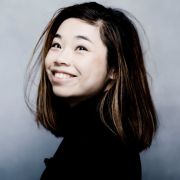
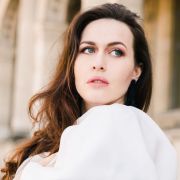
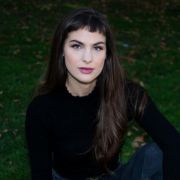
Edwin Crossley-Mercer’s rich and resonant bass brought gravitas in Mors stupebit and his beseeching prayer Confutatis maledictis sung off the book, palms outstretched was a highlight. Tenor Mario Lerchenberger also forsook his score for his Ingemisco solo, elegantly opening out to a radiant top register, soft flute and oboe setting the scene, solemn cellos adding gravitas. Irene Roberts' burnished mezzo was rich in Liber scriptus, all three voices blending well in Lux aeterna with some glorious moments enhanced by the solemn soft low brass chords and spiritual flutes. Soprano Jennifer Davis filled the hall with her clear voice cutting across orchestral forces, her Libera me hushed in heartfelt prayer as four bassoons added emotional weight in a soulful obligato.


Much of the heart of the work comes in the passages with groups of soloists and chorus, and can be where performances can drift. Here, with clear direction from Hahn, voices, orchestra and choir were tightly bound together, the Lacrymosa particularly effective with unaccompanied moments building to the robust Amen. The architecture in the Offertorio quartet starting with cerebral cellos and answering woodwinds, shimmering violas (Hostias) with light oboe and flute complemented the soloists, Hahn pushing the momentum towards the end. Davis and Roberts sang a memorable Agnus Dei, three flutes nimbly weaving in and out between soprano and mezzo.
Any performance of Verdi’s Requiem has a huge choral focus, here the RSNO Chorus and Edinburgh Festival Chorus immaculately prepared by directors Stephen Doughty and James Grossmith respectively were magnificent in the big moments, sensitive in others and achieved a remarkable blended sound with accurate diction. The double chorus Sanctus marched along briskly, full of contrast and agility, Rex tremendae shaped carefully, broadening out from a soft Salva me. The unflappable Hahn made each return of the Dies irae a journey, notching up the speed slightly before guiding us to a calmer finish in a performance which was impressively high on detail.