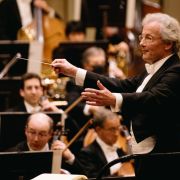
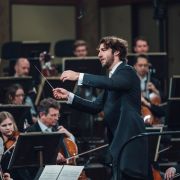
I think the most remarkable aspect of this evening was not merely the quality of the execution – though that was formidable – but the palpable sense of playful care that seemed to permeate every decision, from programming to performance. With an impeccably curated dramaturgy at the Konzerthaus, the Toronto Symphony Orchestra, Gustavo Gimeno, Patricia Kopatchinskaja and Anna Prohaska made a compelling case that artistic genius – and audience communication – extend far beyond technical brilliance.

Kelly-Marie Murphy’s Curiosity, Genius, and the Search for Petula Clark opened with a wealth of textures. Rich in extended percussion techniques and Stravinskian cell structures, the work moves from obsessive, almost frenetic episodes to moments of startling transparency, an homage to the character of Glenn Gould. The orchestra did not struggle once during this 2017 work – they have internalized it completely and it showed. That the composer herself was present to receive the audience’s recognition was more than incidental, it also felt thoughtful and complete.


The transition into excerpts from György Kurtág’s Kafka-Fragmente for soprano and violin intensified the sense of intimacy. In nine aphoristic miniatures lasting six minutes (blink and you miss them) Prohaska and Kopatchinskaja created a miniature, self-contained theatre piece. Prohaska, performing from memory and drawing on long familiarity with the cycle, shaped each fragment with acute textual awareness.Szene am Bahnhof and the biting Der Coitus als Bestrafung were both standouts. The final fragment, Ruhelos, dissolved seamlessly into Béla Bartók’s First Violin Concerto as Prohaska slowly exited the stage, a lovely dramaturgical touch: one composer’s anxieties bleeding into another’s unrequited love.
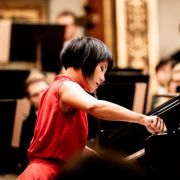
In the Bartók, Kopatchinskaja’s charisma was so complete that I scarcely registered another soul on stage until the final bars. From the opening Andante – its intimate dialogue embodying Bartók’s unrequited love, violinist Stefi Geyer – to the fiery Allegro, she inhabited the music physically and emotionally. Her ability to bleach the sound to utter transparency is fabulous: the final whistle-tones in pianissimo were translucent and perfectly controlled. The Allegro that followed was pure fire, a virtuosic flurry. For her encore, Kopatchinskaja addressed the audience directly, excitedly revealing the canon hidden within the concerto and then energetically leading us all in singing it in four-parts.


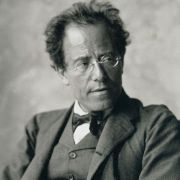
After the interval, Gustav Mahler’s Fourth Symphony offered a refreshing perspective on a Viennese staple. Gimeno’s approach was refined, thoughtful and notable for its lack of podium theatrics. While those who have learned to love it through the lens of Viennese agogic and Klangstil will weigh moments in the balances and find them wanting, this was very well rehearsed and thoroughly considered. Phrases were carefully shaped, dynamics nuanced and varied, and there was soloistic brilliance to spare. If the brass occasionally overwhelmed the Konzerthaus’ acoustics, the intent remained legible: a symphony seemingly haunted backward from its folk-song finale. In that final movement, Prohaska’s modestly sized lyric soprano navigated the finale’s child-vision of heaven with pure, unforced innocence.
It was, in sum, an evening that invited reflection, featuring soloists who are complete artists rather than mere virtuosi, and an orchestra and their conductor playing and curating with evident commitment.