Fans of soccer — or futból as it is better known in the rest of the American continent — often call it “the beautiful game”, a poetic sobriquet vividly confirmed by the ongoing World Cup. In a time of war, the sport has become a briefly unifying spectacle, wherein national rivalries are settled not with missiles but with feats of athletic daring. There’s a common thread there with music, so often referred to as a “universal language”. Composers from across the Americas were brought together at the Hollywood Bowl, all speaking the common lingua franca of the brotherhood of man.

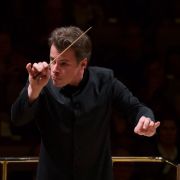
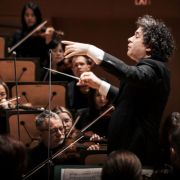
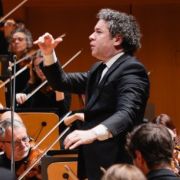
Tito Muñoz, the evening’s guest conductor, opened with Alberto Ginastera’s suite from his postwar ballet, Estancia. With ruggedly profiled ostinati and bass lines that plunged deep into the Continental Divide, the conductor’s swaggering reading brought to life the ballet’s underlying clash of rural life against the machine age. He also whipped up the ardor in the Danza del trigo that made something of a voluptuary out of the usually button-downed Ginastera.


Streamline moderne evocations of Pampas life were bookended with Aaron Copland’s daydreams of the Wild West. His ballet Billy the Kid is a characteristically American amalgam of high and low, part Stravinsky, part Bonanza. Heard in its concert suite, this is music that thrives on the kind of extroversion balanced with poise that Muñoz effortlessly managed, whose direction was buoyed by the rousing Los Angeles Philharmonic winds and brass.
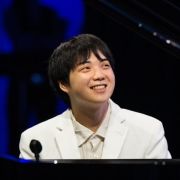
Samuel Barber’s Violin Concerto offered a contrast – and not only within the context of the program. To a global audience now too familiar with the features of “the ugly American”, this reflective and thoughtful piece shows another side of the Yankee face. Like the composer’s nation, in his day as much as ours, its soloist is also made to struggle with the unstoppable tidal wave of the emerging new world, like a character out of a Booth Tarkington novel. Randall Goosby, whose Kreislerian playing effortlessly wove strand after golden lyric strand, goaded the music on and magnified its essential dignity. He also dispatched the moto perpetuo finale with the athletic panache of a Zidane.
A bit too on the nose was the premiere of a short film commemorating the local Los Angeles Football Club. A Philharmonic commission, it was was scored by Adam Schoenberg. No relation, something that his music’s aseptic good vibes made clear.


Altogether different was Silvestre Revueltas’ Sensemayá, which is the closest thing the short-lived Mexican composer came to penning a hit. Coming after Schoenberg’s slick euphony, Revueltas’ hot grooves and sizzling dissonances came as a refreshing and enlivening chaser, especially as delivered by Muñoz, whose earthy and rhythmically impactful performance must have registered shockwaves all the way into the Inland Empire. Composer, orchestra and conductor seemed to converge into a single rumbustious entity in the work’s final measures. It was a moment worthy of being crowned by Andrés Cantor’s emphatic cry of “gooooooool”!