“Youth’s a stuff will not endure,” Shakespeare once wrote, a sentiment that pianist Mao Fujita echoed in a recent Japanese interview. “I really came to be grateful for how precious it is to be able to play the piano as I wish while I’m still young,” he said. It was that same attitude that Fujita honed in on last Thursday at his Los Angeles debut. Mozart's music, forever young, was an ideal vehicle for the pianist's artistry. If his schoolboy demeanor appeared to delight the Hollywood Bowl audience, his playing of Mozart’s Piano Concerto no. 19 in F major, K459, roused them to several ovations.


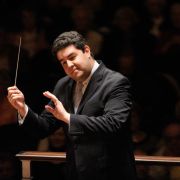
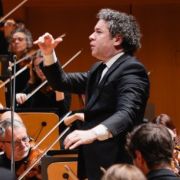
Not that Fujita resorted to theatrics to win over his listeners. He played with poise and a good bit of puckish charm in a performance of the first movement that was a welcome refreshment on a muggy night. The pianist's fingers threaded together each sparkling note like a chain of pearls. In the tongue-in-cheek finale – a forecast of Poulenc's civilized hijinks – Fujita produced a shimmering cascade of sound that was impeccably voiced, even through finger-twisting passages. Roberto González-Monjas, making his own Bowl debut, deftly partnered Fujita from the podium with supportive orchestral playing informed by period nuance. The conductor drew from the Philharmonic a lean, pert sound; ideal for a conversational, big chamber music take on this concerto.
That preference for intimacy over bombast continued into González-Monjas’ athletic and lithe reading of Brahms’ stormy Fourth Symphony. At times it felt almost weightless: The conductor’s Mendelssohnian prance through the Allegro giocoso sounded like Brahms as a Californian sun god catching the waves in Malibu. The airy interpretation of the finale, more cranky here than tragic, on the other hand, was disappointingly anticlimactic.


Things were better elsewhere. The symphony’s first movement gained the most. By shedding its usual weight for a more sinewy sonority, González-Monjas heightened the movement’s anxious mood. Inner parts often buried in renditions by larger orchestras were also delineated crisply. Winds were the main beneficiaries. In the bardic Andante moderato, the conductor’s coloristic revelations were an elegant rebuttal to the cliché of Brahms the merely workmanlike orchestrator.
Korngold’s Straussiana, a vision of Alt Wien painted in Hollywood Technicolor, opened the program. González-Monjas showed another face here. Instead of the litheness the conductor cultivated in the rest of the program, he successfully prevailed upon the orchestra to schmaltz up its characteristic chrome luster. The tones that poured out from the Bowl into the Daisy Dell, rich and voluptuous, were as sweet as Sachertorte.