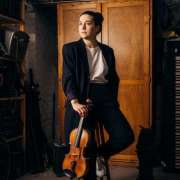
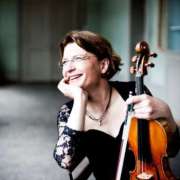
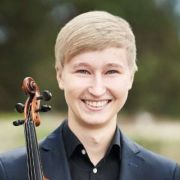
How often does one encounter György Ligeti, Ottorino Respighi and Othmar Schoeck sharing a platform? Perhaps not even once in a blue moon. But, thanks to the radical vision of five consummate artists, that opportunity was made manifest with a Wigmore Hall programme that offered an unforgettable experience. Quatuor Diotima – Yun-Peng Zhao and Léo Marillier (violins), Franck Chevalier (viola), Alexis Descharmes (cello) – and baritone Stéphane Degout gave a masterclass in chamber music with extraordinary evocations of a lurid sunset, nocturnes that would elude Field and Chopin, metamorphoses unknown to Richard Strauss and dark nights of the soul beyond the ken of Schoenberg.


Of the three works, Ligeti’s String Quartet no.1, intriguingly subtitled Métamorphoses nocturnes, is by far the best known and is a graphic documentary of ordinary life in Hungary in the years leading up to the uprising of 1956. Its variegated formal structure, ever-shifting tempi and expressive directions might easily be decoded as frustration, anger, anxiety and despair, and the shadings between them; the apparent calm of the ending could readily be followed by a section marked molto agitato. That was all expertly captured in a performance that was gripping, tortured, menacing and exacting, and all the shadings in between. The binding agent was a rapport between the players that produced a sound of seductive elegance enriched with resplendent, fine-grained colours.
Respighi’s Il tramonto is a setting of Shelley’s poem The Sunset, translated into Italian. It narrates a disturbing encounter between a nameless youth and his lover, Isabel; after a night of passion the youth is found dead and his lover spends the rest of her life in lamentation and filial devotion. Originally scored for mezzo-soprano and string quartet, the darker resonance of Degout’s lachrymal baritone made a very convincing case for its nocturnal vicissitudes. The shifting shades of twilight, moonlight and starlight were delicately evoked by the finely judged intermingling of voice and strings. The poet tells us that the youth “never saw the sun”; neither did this performance, but it wonderfully caught the glow on the horizon.


As a composer of around 400 songs, Schoeck’s vocal affinities are everywhere evident in settings of the morbidly obsessive poetry of Nikolaus Lenau, his Notturno. It is a mystery how this work has escaped the attention of a wider audience; not even its supposed influence of Debussy, Schoenberg and Zemlinsky seems to have coaxed it into the limelight. The performers here unfolded the 40-minute drama with an inspired combination of full-blooded passion, a grimly-articulated sense of withered and corrupted emotions, and the alienating strictures of mind under siege. Such was the intensity of the performance that, except for the occasional and almost imperceptible glances, all eyes were deep into the score. If one were compiling a shortlist of chamber pieces that represent the darkest nights of the soul, this piece would be near to the top.