The opera-loving citizens of Cologne have been waiting 14 years for the (absurdly prolonged) refurbishment of their opera house on Offenbachplatz. Some 1.5 billion Euros later, as the theatre reopened with Oper Köln’s new Rosenkavalier, you might have expected they would get something celebratory and life-enhancing. Unfortunately, however, Marie-Ève Signeyrole’s production is a drab intellectual exercise that sells the performers short.

Signeyrole reimagines Rosenkavalier as a cinema story in the era of Me Too. Marie-Therese (don’t call her the Marschallin!) is a film director who has cast herself in a love story with Octavian, who she also loves in real life. Ochs is a movie producer, clearly modelled on Harvey Weinstein, who treats women appallingly. He has taken a shine to Sophie, an up-and-coming actress, and has decided to manipulate the Silver Rose Awards so that she wins and, therefore, Ochs will get his opportunity to seduce her. Octavian presents the award at the ceremony – which, along with its after-party, takes up Act 2 – and then falls for Sophie, so they set a trap for Ochs that results in him being caught in the act. Marie-Therese decides to rewrite her screenplay, stepping back and giving her own role to Sophie so that the young people can be happy.


You could argue that this retelling just about fits some of the concepts in Hugo von Hofmannsthal‘s libretto. The key problem is that it doesn’t fit the tone of Strauss’ music at all. His score is shot through with beauty, grace, elegance and bittersweet regret, none of which are present in a stage picture that seems intentionally to drag the eye away from what the ear is hearing. It’s not just that you have to read a programme essay to understand it, nor that it leaves several loose ends hanging (how on earth does Mariandl fit into this?!): it’s that Fabien Teigné’s stage designs are desperately drab, lacking in colour and energy, so that the overall effect drains the life from one of opera’s most moving stories and makes the whole evening feel a lot longer than it is. Most damagingly, there isn’t a drop of humour in what Strauss labelled a Komödie für Musik: instead the tone is preachy and finger-wagging, as if moral lessons about the patriarchy were the only thing we’re expected to take from a staging that’s designed to improve the audience’s behaviour.

The only consolations are musical but, thankfully, those musical consolations are considerable. Magdalena Hinterdobler sounded marvellous as Marie-Therese; a creamy, rich, fully-formed soprano who appeared to give consideration to every word and imbued every phrase with musical intelligence and psychological depth. Bianca Andrew sang Octavian with energy and punch and, even when required to strut repetitively around the stage, she did so with conviction. Elsa Benoit’s Sophie was pearly and bright, bringing innocence to the voice even as she was required to evoke worldly-wisdom. Martin Summer was a relatively young Ochs, and he brought a lot of potential to the part with his bluff singing, though he sounded tired by the end of Act 2 and his characterisation was a little anonymous. Christian Meidl was an energetic Faninal, even if he was a little pinched at the top, and the chorus did a marvellous job as a bunch of (fairly ghastly) media hangers-on in everything from Act 1’s levee to Act 3’s humiliation ritual.


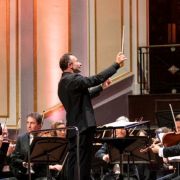
Best of all, perhaps, the Gürzenich Orchestra did a fantastic job with Strauss’ ripe orchestral textures and gushing streams of melody. The new orchestra pit is deep, and that might be why the projection of the sound out into the auditorium was so successful. You could tell this orchestra plays Strauss’ tone poems in the concert hall, too, so familiar do they seem with his medium, and Andrés Orozco-Estrada, their Generalmusikdirektor, shaped the whole thing with confidence and style.

If only they’d been given a stage picture to match. I sat next to a Cologne gentleman whose comment on the show was words to the effect of “We waited 14 years, and we got this!”