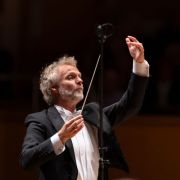
Like many professional orchestras, the Scottish Chamber Orchestra tends to get time off over Easter, and they certainly don’t play on Good Friday. Therefore, for all its centrality to the western canon, Bach’s St Matthew Passion isn’t a work you’d readily associate with them. Nevertheless, with their expertise in period performance and their sensitivity to Baroque music, it’s a piece you’d expect them to be good at, especially when they’re conducted by their Principal Conductor Maxim Emelyanychev, himself an authority on the music of Bach’s era, as well as a man with a great flair for drama.

So it was surprising, and more than a little disappointing, that the main thing this performance lacked was the very sense of dramatic thrust that I was expecting. The opening chorus was expansive and beautifully played – though it took a few bars to get used to hearing it at modern concert pitch – but also hushed, restrained and just a bit too reverential. It was as though we were approaching a holy relic, queuing up to see it in a vitrine, rather than being plunged into a universal drama of human suffering and cosmic redemption. The dramatic edges sounded as though they had been sanded down and smoothed, and that characterised most of the performance, with beauty and respect taking precedence over rawness or pain. The “thunder” chorus in Gethsemane, for example, neither stood out nor leapt off the page in the way that it should, and part two’s turba choruses were consistently a touch heavy.


Some of that might have been down to the SCO Chorus: Bach’s razor-sharp choral drama is a stretch for even a professional chorus when it’s taken at full pelt, so maybe it was simply safer to take those biting shards of choral power at a slower pace. Understandable, but still a pity, and it didn’t help that the 14 singers of the ripieno, choristers from Edinburgh’s St Mary’s Episcopal Cathedral, were mostly swallowed up by the volume made by more than 50 adults. The one element where the chorus did excel was in the chorales, which were warm, fulsome, and consistently achieved the effect of reaching out to the audience/congregation to draw them into the pity of the story.
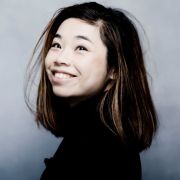
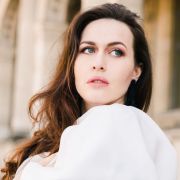
Nor were the soloists consistently on their finest form. Nick Pritchard was a fantastically good, beautifully communicative Evangelist, though his excellence exposed the rather tight tenor of Robert Murray, who sang the arias. Matthew Brook didn’t sound comfortable as Jesus, something that you could excuse as revealing Christ’s humanity and vulnerability, but still he only rarely sounded as though he was firing on all cylinders. Roderick Williams was a dependably humane bass soloist, and Tim Mead was an extremely fine countertenor, singing “Erbarme dich” with both spiritual beauty and gutsy power. Finest of all was Hilary Cronin, who turned the soprano arias into luminous pearls of beauty, and made “Aus Liebe” the still focal point of the whole performance.
The orchestra played with all the skill and beauty you’d expect from players like this. Emelyanychev’s direction of them was often pretty hands-off in the arias, wisely allowing the vocal and instrumental soloists to get on with it at their own pace, and always with great results, because every one of those instrumental obbligati was gorgeously played. Every so often, Emelyanychev’s skill as a natural dramatist broke through, mostly in the bristling harpsichord line of arias like the tenor’s “Geduld!” or the bass’s “Gebt mir meinen Jesum wieder.” However, none of this changes the fact that, while elements of this Matthew Passion were magnificent, this wasn’t a satisfying evening as a whole.