On 22nd August, musicians of the Boston Symphony Orchestra voted to authorize a strike — the first such action in the organization’s 135-year history. The move came amid fraught contract negotiations and a lingering resentment over the board’s decision to dismiss Music Director, Andris Nelsons. Still, there was no sense of tension in the air as the orchestra took the Tanglewood stage that evening, although the penultimate concert of their final summer weekend felt somewhat scattered.

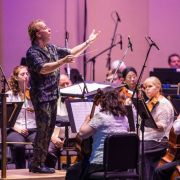
Leonard Bernstein’s Chichester Psalms regularly gets dusted off in these environs to showcase the Tanglewood Festival Chorus. On this outing, though, the vocalists sounded slapdash under the direction of guest chorusmaster Jean-Sébastien Vallée. Entrances among the male and female choristers were rushed and imprecise in the first movement, intonation suffering as a result. The singers pushed volume to a worrying degree, perhaps to overcome the hard-charging, rhythmically sloppy conducting from Thomas Wilkins.


The contemplative second movement remained largely earthbound, despite lovely playing from Principal Harp Jessica Zhou. Edward Njuguna, a 12-year-old boy soprano, lacked the ethereal quality needed for Bernstein’s setting of Psalm 23, his voice growing jittery on the high ascending phrases. The strings produced an overall tinny quality here, more eerie than reverent. The work hit its stride in the final section, with the solo quartet melding together well and Wilkins summoning the appropriate shift from ecstatic revelry to becalmed peace. But the Tanglewood Festival Chorus has been without a choral director for the past year and unfortunate seams are starting to show.
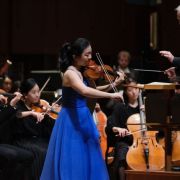
Star violinist Randall Goosby closed out the concert’s first half with an unusually generous appearance. He began with a piece that’s become a calling card — Florence Price’s Violin Concerto no. 2 — and proceeded to wring a musical logic out of something that can feel like sketches for a larger work, never completed. Goosby’s warm, chestnut-colored tone complemented the vibrant extremes of Price’s orchestral writing, from the haunted, bell-like plinking of the celesta to the jazzy swing of the woodwinds. This single-movement concerto has no greater champion.

Goosby switched gears entirely for Saint-Saëns’ Introduction and Rondo capriccioso, playing with a muscular ferocity that matched Wilkins’ call for energetic, deeply vibrated playing from the orchestral strings. This was the BSO at its best, with a rich tone that shot down to the floorboards, and Goosby proved an ideal partner. After such abundance, no encore was necessary.


Dvořák’s Symphony no. 8 in G major sits between his two monumental works for the genre, and it can sometimes seem like an afterthought. Not so in Wilkins’ hands: he ideally charted the push-and-pull between airiness and simmering melancholy in the first movement, adding weight to something that can otherwise feel simply pleasant and peaceful. Wilkins took a faster tempo than usual in the Adagio and Allegretto grazioso, but not at the expense of detail: woodwinds absolutely sang, anchored by Lorna McGhee’s solo flute. Penny-bright fanfares heralded the finale, and the work finished on an exultant high. Whatever turmoil plagues the BSO behind the scenes this weekend was forgotten for 40 stirring minutes.