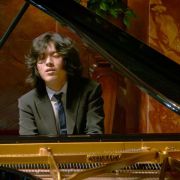
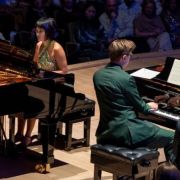
Six years is a long time in music. That was when Arcadi Volodos last played at the Barbican, in 2019, and the piano world has not stood still. Controlled perfection continues to flourish at competitions worldwide, yet true – and often polarising – artistry has been falling out of favour. There may be no roadmap to invention, but an artist should open our ears, prompting us to question our assumptions from first principles. Volodos was here to remind us how it’s done.

What first commands attention is his kaleidoscopic range. Volodos has an uncanny ability to draw the listener in with the smallest of dynamic shifts, sometimes at the very limits of audibility. In his hands, Schubert’s life-affirming Piano Sonata in A major, D.959, became a gallery of half-lights: magisterial opening chords gave way to the chiaroscuro of undulating triplets. His awareness of harmonic tension, coupled with an acute sensitivity to his environment, emboldened him to risk it all onstage – tempo fluctuations and long silences that could easily imperil the music’s structural integrity. But Volodos tamed his ideas, imbuing the work with pastel colours and leaving us in no doubt that we are in the presence of an artist.


At the heart of this sonata lies the Andantino, one of Schubert’s most devastating slow movements. Each phrase had its contour, shaped through whispered, grief-stricken cries; yet Volodos goes further. He thinks along multiple planes simultaneously, scrutinising the space between every note while never losing sight of the whole. This lent a terrifying weight to the savage, central outburst, with pedalling effects that enswathed the hall, and made the quasi-hallucinatory embellishments of the theme’s return all the more haunting. The final chords were transformed into the Scherzo’s biting arpeggios, leading attacca into the warm embrace of the Finale. Volodos treated every melodic line with care, before pressing into a sprint through the coda and a mighty closing flourish.
The shift from Schubert to Schumann brought no loss of intensity: Davidsbündlertänze proved a ready vehicle for Volodos’ mercurial temperament. A set of 18 character pieces, each is attributed to one of Schumann’s alter egos – the fiery, impulsive Florestan and the dreamy, introspective Eusebius. With his exceptional tonal reach, Volodos moved effortlessly between the two states. From the quirky agogics of no. 3 to the finely-judged ritenutos of no. 7, the inexorable growth of no. 13 and the magic of no. 17, he brought cohesion and character to what is often treated as a disparate group of dances. The postlude, a disarmingly simple waltz, unfolded with great tenderness, the twelve bass Cs (signalling a bell tolling midnight) allowed to fade imperceptibly away.


Having largely set aside the ultra-virtuosic arrangements that first made his name, Volodos made a welcome return to the style with Liszt’s Hungarian Rhapsody no. 13. His agility was astounding – not least the shattering blurs of octaves and a friska so exuberant it had those around me laughing out loud. To witness such pianistic wizardry was a privilege.
The ovation was ecstatic, and Volodos responded generously with four encores: a Brahms intermezzo of profound warmth, followed by Schubert, Lecuona and Mompou. These were gifts from a poet of the keyboard, who ventured to the edge of human imagination and allowed us a glimpse beyond.