A year after his acclaimed all-Russian recital at Carnegie Hall, the young Canadian pianist Bruce Liu returned with a wide-ranging program – spanning three centuries and five nationalities – spotlighting his virtuosity and elegance. He began with the most modern selection in the nine-part lineup: a charging, rhythmically precise rendering of Ligeti’s rarely heard Fanfares, the fourth in the Hungarian composer’s 1985-2001 cycle of 18. Liu navigated the interlocking textures and harmonies with clarity, energy and effortless expertise.

From Ligeti the pianist leaped back three centuries to play Bach’s French Suite no. 5 in G major. Unlike some of the composer’s more academic creations, the seven movements, each inspired by a specific courtly dance, are predominantly bright and cheerful. Liu dispatched a splendid account, balancing subtle, harpsichord-like nuances with the more robust, sounds of the modern Steinway. His playing was its most impressive in the contrasting final two movements: the slow, elegantly phrased Loure, and the rapid-fire Gigue, where he displayed a delightful sense of spontaneity and energy.


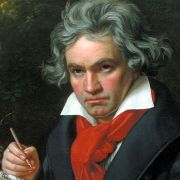
The program’s first half concluded with an impeccable interpretation of Beethoven’s majestic C major sonata, dedicated to the composer’s patron, Count Ferdinand von Waldstein, whose name it bears. Playing at a breathtaking tempo, Liu conveyed all the drama and feverish intensity of the opening Allegro con brio. The central Introduzione, calm and mysterious, gave way to an especially ebullient Rondo finale, delivered with full symphonic impact.
The recital’s second half began with the two nocturnes comprising Chopin’s Op.27. In the C sharp minor, Liu expertly balanced the shifting moods, moving from deeply reflective to violently agitated and then back to more meditative calm. In the familiar D flat major, his playing had a captivating elegance, allowing the gentle cantabile line to float above his uncommonly graceful left-hand arpeggios.
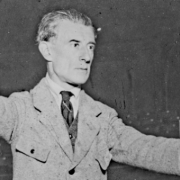
The final items on the program were all Spanish-themed. In Alborada del gracioso, the famously challenging fourth movement of Ravel’s Miroirs, Liu handled the bold dissonances and sharply percussive rhythms with ease. He was equally at home with the fast-paced folk sounds of El puerto, Albéniz’s vividly bustling depiction of life in the Andalusian fishing town of El Puerto de Santa Maria. His introspective playing in Frederico Mompou’s Glossa and Fantasia sobre Au clair de la lune fully evoked the quiet simplicity and innocence of the Catalan composer’s enigmatic miniatures.


Like the Ravel, Liszt’s Rhapsodie espagnole is a series of dances and variations, but whereas the French composer's score is famous for its rapid repeated notes and guitar-like pizzicato-like effects, Liszt’s rhapsody is a ‘big piano’ piece, emphasizing symphonic-scale chords, octaves and arpeggios. Faced with this fiendishly difficult music, Liu delivered a bravura performance, successfully integrating the technical demands with the more atmospheric and emotional elements, bringing this imaginative program to a triumphant close.
In response to the long and enthusiastic ovation, the pianist offered three encores: a tenderly soulful rendition of Alexander Siloti’s piano arrangement of Bach’s Prelude BWV 855a, followed by a blazing traversal of the finale of Beethoven’s “Moonlight” Sonata, and a hauntingly melancholic Nocturne by Chopin.