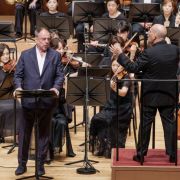
At Lotte Concert Hall, Andrés Orozco-Estrada and the KBS Symphony Orchestra traced one aesthetic: line kept airborne, rhythm treated as pressure, motion preferred to mass. Beethoven’s Egmont Overture made the point in miniature. The slow introduction was held in taut suspension, then the Allegro sprang forward on clipped accents and quick-release rhythms, giving the heroic frame a dance-borne lift while preserving tension. String attacks were lean, withdrawals immediate. When oboe, clarinet and bassoon entered, Orozco-Estrada pared back the string weight, letting the argument pass cleanly across the stage. In the closing bars, the piccolo brightened the release of stored kinetic charge and the music found its victory through motion itself.


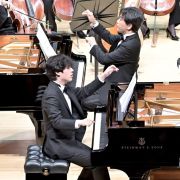
Bruce Liu’s Tchaikovsky First Piano Concerto placed the same values in less hospitable terrain. His command was never in question: octaves landed squarely, passagework was neatly threaded and the repeated-note and chordal writing in the first movement’s central surge passed at a bold tempo with almost casual precision. Yet the performance remained light in substance. Liu’s tone favoured sheen, profile and transparency, with less of the dark grain and physical resistance that allow this concerto to push back against the orchestra. The famous opening had contour, although the piano sat on the surface of the orchestral sonority. The transition into Allegro con spirito was naturally judged; the first subject had spring and polish, its folk edge refined into a sleek modern profile. That clarity brought real gains, especially in textures where many pianists thicken the air, yet colour and harmonic weight remained underdeveloped.
The Andantino offered poise, charm and chamber balance, while the Prestissimo flickered neatly. In the finale, articulation stayed crisp and structure remained readable, yet heat did not accumulate. Orozco-Estrada shaped the accompaniment with alert tact, keeping phrases breathable around Liu’s bright dynamic range. It was cultivated Tchaikovsky, elegant and lucid, short of visceral temperature.
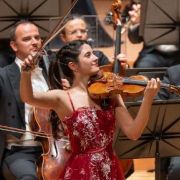
After the interval, the same kinetic language found body. Tchaikovsky’s Fifth Symphony was taken at swift basic tempi, its argument propelled by rhythm, bloom and theatrical pressure. The slow introduction had gravity without inertia: low strings and clarinets established the Fate motif in dark focus and the Allegro con anima rose from that tread with tensile purpose. With Soo-Jin Hong of the Danish National Symphony Orchestra as guest leader, the first desk gave unusual definition to the string body; attacks tightened, inner motion clarified and the sonority broadened.


The first movement’s second subject was especially vivid. Its waltz ease sounded as though ballroom elegance were being heard from a future already damaged. Lyric episodes opened colder spaces before the development gathered force, and the fugato writing stayed legible even as climaxes filled the hall. In the Andante cantabile, Hongpark Kim’s horn solo was shaped nobly. Oboe and horn exchanges kept the song alive at phrase-ends; the Fate motif’s return struck through context as much as volume, and the resumed cantabile bore the bruise.
The Valse had elegance and rhythmic alertness, if one could wish for sharper bite in the scherzando cracks beneath its polished floor. The finale restored the evening’s main virtue: propulsion organised in layers. Rushing strings remained audible beneath the brass, timpani raised the dynamic ceiling and lyrical secondary areas breathed without slackening the frame. The final march might have taken one step closer to recklessness, yet the cumulative design held. This was vivid, full-bodied Tchaikovsky, passionate without losing its grammar, and a persuasive night for the KBS Symphony Orchestra.