This season, Hamburg is celebrating America 250 alongside the 80th anniversary of arguably the most popular active American composer, John Adams. Naturally, lots of guests and compositions from the other side of the Atlantic will visit the city.

Adams’ Lollapalooza grabbed the room right away. Originally written for Simon Rattle’s 40th birthday, the piece features distinct rhythmic patterns that twisted around each other, pulling back and forth to build a bustling landscape in endless motion. Strings, winds, and brass took turns stealing the spotlight, while the percussion kept busy splashing radiance over the hustle and bustle. In the middle section, the texture grew lighter and the celesta joined the sonic party. When the coda came, where the tempo tightened up, the rhythms blurred into chaotic ambiguity. This compact piece concluded on crisp punches from the percussion. In just a few minutes, the NDR Elbphilharmonie Orchestra clearly had an enjoyable time, keeping the energy burning bright inside that mechanical yet swinging groove.


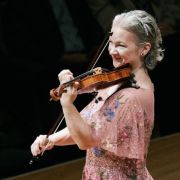
Replacing the indisposed Janine Jansen, who was scheduled to play Szymanowski, her Dutch compatriot Simone Lamsma stepped in with Korngold instead. This ‘American’ concerto kept that direct appeal going, neither soloist nor orchestra holding anything back. Right out of the gate, the first movement mapped out its main theme with broad strokes, a melody that returned later in increasingly lush orchestration. Lamsma had plenty of agile bow work and quick runs to show off, alongside cadenzas that let her quick reflexes shine. Throughout, the orchestra backed her up with boundless spirit. The second movement Romance shifted gears completely. The solo violin sang sustained vocal lines in its high register with stunning delicacy, wrapped in a plush cushion from the orchestra, especially the harp. The finale plunged back into lively energy, where musical sparks flew off rustic bow strokes and rapid spiccato. The orchestra matched her with superb rubato and total confidence. Here we heard an almost childlike theme that felt like watching a vintage cartoon. For an encore, Les Furies from Ysaÿe’s Second Sonata, exploded with razor-sharp contours and sheer brilliance.
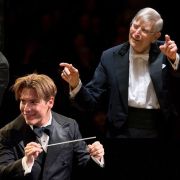
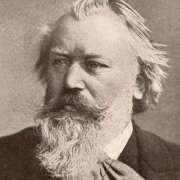
After the break, Alan Gilbert conducted a Brahms First Symphony that felt unhurried and well in control. He showed an overview in pacing, holding back early on so the actual climaxes hit with maximum force. From this perspective, the restrained gravity of the opening Un poco sostenuto made sense and the sprawling main theme held its full weight in reserve until the recapitulation. The second movement moved along at a fluid clip, much like the third. Both episodes served as a graceful excursion nestled between the two massive outer pillars.


The fourth movement was filled with fascinating historical echoes, almost bridging Brahms to the composers who followed. In the slow introduction, the brass cut through like sunlight breaking ice. It was a chilling radiance that pointed straight ahead to Sibelius decades later. As the movement unfolded, its architecture stayed remarkably clear, and the noble brass chorales called to mind the organ-like grandeur of Bruckner.
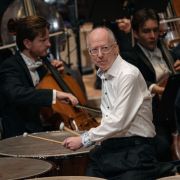
It was a performance of an undeniably high order. Every section got huge cheers at the bow, especially the timpanist. Honestly, Brahms gave the timpani far more room to shine tonight than the actual timpani concerto did a few days ago.
This concert was promoted by the NDR.