Long before flourishing as a Tsarist summer retreat, Haapsalu carried its coastal geography in its name which is derived from the Estonian haab (aspen) and the archaic salu (forested island). Today, the town unfolds gracefully around its central medieval fortress, from which a labyrinth of winding streets weaves outward toward the coastline, lined with charming wooden houses. Extending a series of slender peninsulas into the Baltic Sea, Haapsalu invites visitors to traverse a rich tapestry of landscapes: multi-layered reed beds and wetlands merge into fragrant pine forests. Above, changing northern skies cast shifting shadows over the water, while the coastal breeze, punctuated by the ambient calls of seabirds, provides a fitting sensory backdrop to Estonia’s treasured summer gathering, the Haapsalu Early Music Festival.

Founded over 30 years ago by musicologist and educator Toomas Siitan, the festival has evolved into an essential Early Music showcase for specialists from across the Nordic region and beyond, while also nurturing young musicians through its annual Early Music Youth Summer Course. The performances revolved around the town’s two distinct historic sanctuaries: the austere Haapsalu Cathedral, embedded within the fortress with its massive stone walls and soaring gothic vaulting that spans a column-free interior; and the more intimate St John’s Church, whose modest white-plastered facade houses a sunlit nave anchored by exquisite Baroque woodcarvings.
Inside the Cathedral, the festival opened with Handel’s Joshua. Directed by Siitan, the Haapsalu Festival Baroque Orchestra delivered an interpretation defined by warmth and sympathetic understanding. The performance adopted a markedly unhurried pace. Spanning three hours from 8pm, the audience was watching the luminous colour shift of the Nordic summer night sky through the altar windows.

The strings played with remarkable elasticity, punctuated by frequent brilliance from the concertmaster. The basso continuo remained vibrant throughout; the harpsichord (Saale Fischer) and cello engaged in a commentary-like dialogue. Though the brass occasionally leaned into an unpolished texture, they joined the woodwinds in sustaining an infectious energy. The Tumult Ensemble an proved outstanding choir, navigating Handel’s dense fugal passages with clarity while painting text with vivid emotional brushstrokes.


As Joshua, tenor Guy Cutting presented a performance of remarkable intelligence. Acting as a thoughtful mediator, he listened intently to the choir and orchestra, blending his bright tone with the brass, his portrayal more of an insightful statesman. Alvar Tiisler’s Caleb provided a majestic, authoritative presence, his resonant bass weaving seamlessly with the low strings to wrap the church in a rich sonic blanket. As the young lovers, Tuuri Dede (Othniel) and Maria Valdmaa (Achsah) formed a compelling pair. Dede captured the work’s most operatic moments, masterfully measuring her projection against the church’s echo to depict a confident leader. Valdmaa brought an endearing, tender vulnerability to Achsah during moments of quiet anxiety, though more dynamic inflection may have added extra dimension to her consistently lyrical lines.

Cutting and Tiisler later returned to Haapsalu Cathedral to launch their programme, Love sounds th’ Alarm, rejoined by Ensemble Floridante for a flamboyant showcase of Baroque arias. Throughout the evening, Floridante played with imagination, sensitive articulation and rhythmic vitality, providing a luminous backdrop most vividly captured in Purcell’s two Chaconnes. From the intensity of Handel’s Theodora to the interiority of Bach’s St John Passion, Tiisler’s versatile performance range was striking. Most unforgettable was the Cold Song from Purcell’s King Arthur, where his chilling articulation merged with the ensemble’s icy staccato and relentless crescendo to thrilling effect.
Cutting was equally commanding, his metallic, heroic tenor radiating throughout. He negotiated the high register of Handel’s “Waft her, angels” with agility, brought deeply lyrical warmth to Purcell’s “Music for a while” alongside continuo harpsichord and cello, and closed with confidence in Handel’s “Love sounds th’ alarm”. The chemistry between both singers in their duets radiated genuine affection.
Beyond the high Baroque vocal brilliance, the cathedral also hosted a monumental Renaissance canon: Jacob Obrecht’s Missa Maria Zart. Much like Schoenberg’s dense creations, Obrecht’s intricate weaving of the Maria Zart melody into the polyphony yields its secrets probably only through rigorous score reading rather than simple listening. Yet Cappella Pratensis intrigued the audience before the music even began, with a beautiful facsimile score displayed on a high wooden choir desk.

The performance opened with a captivating processional entrada, the ensemble singing the cantus firmus from offstage. As they gathered tightly around the choir desk, arms resting on one another’s shoulders in a scene like 15th-century musical iconography, the visual setup immediately signalled their unified approach. Visually and acoustically, the ensemble functioned like organ stops: shifting from a single group to split configurations on either side of the desk during parts of the Gloria, while a single soloist chanted the Praefatio before the Sanctus, met with choral responses.
Outside the grand cathedral, audiences were welcomed into the airy St John’s for a series of chamber music concerts at 5pm. Kristiina Watt’s recital evoked the quiet intensity of a Baroque painting depicting a domestic music-making scene. Clad in an elegant black dress and bathed in the late afternoon sunlight, she accompanied herself on the lute in a programme tracing John Dowland’s Italian journey alongside pieces by Holborne, Luzzaschi and Caccini. Her voice possessed an intriguing, almost androgynous quality with a distinct metallic quality.

Grouped by emotional arcs, the programme highlighted Watt’s textual sensitivity, using appropriate articulation to illuminate key moments in the libretto. Her finest moments belonged to Holborne whose Fantasy unfolded with sublime tranquility, and Caccini’s Amor, io parto which radiated warmth, its upper-register ornamentation glittering in the golden light. Although minor vocal instabilities occasionally touched her Dowland and Luzzaschi’s rapid coloratura proved challenging, her lyrical interpretations truly impressed.
In comparison, Duo Lislevand-Duncumb presented an ambitious programme, spanning four centuries, centred on the theme of a musical labyrinth. From defamiliarised Monteverdi adaptations and classic French gamba works to a contemporary, rock-infused showpiece, the duo crafted a compelling dialogue between bowed and plucked strings. André Lislevand’s gamba displayed breadth and an individual interpretative path. His performance traversed the expansive phrasing of Marais’ Sarabande and the refined elegance of his Chaconne to Telemann’s rustic vitality in the Vivace. The emotional and thematic centerpiece was Marais’ Le Labyrinthe, a dramatic journey full of sudden pauses, unexpected harmonic shifts and a restless search across pitch extremes. Lislevand navigated its fantastical passages with theatrical brilliance, momentarily wandering through its maze before arriving at a warm home-returning resolution.


Beside him, Jadran Duncumb’s theorbo proved to be a passionate, equal partner. He occasionally injected a stormy low-pitch rumble into the room, propelling the rhythm forward with impulse. Their mutual musical rapport was particularly noticeable in Lislevand’s arrangement of Nuno Bettencourt’s Midnight Express, which took on a breathtaking, Shostakovich-like intensity. While Lislevand’s heavily recontextualised Monteverdi transcriptions created an alienating feel, the concert concluded satisfyingly in classic works by Carl Friedrich Abel and Antoine Forqueray (La Buisson), the duo embracing a vocal approach to bring their auditory labyrinth to a serene close.
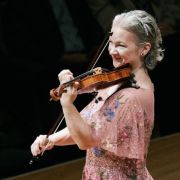
The musical adventure did not stop here. Led by violinist Aira Maria Lehtipuu who served as concertmaster for two major vocal concerts beforehand, Pirkanmaa Barokki wove a dazzling sonic tapestry, pairing Alessandro Stradella’s adventurous sinfonias with storytelling. Like Caravaggio, Stradella led a tempestuous life, vividly conveyed through readings from his letters that punctuated the music. Lehtipuu’s playing combined an economical technical output with deeply substantial, risk-taking expression. Capturing both the wild breadth and rustic vitality of the score, the performances were rich in sudden pauses and drastic emotional shifts, seamlessly alternating with tender beauty. Towards the end of the F major sinfonia, her execution even tapped into the raw energy of a folk fiddle.

The two A minor works formed the evening’s undeniable climax. Navigating a dramatic arc from free, fantasy-like rubato to an urgent chase between violin and chest organ, they eventually gave way to a heartfelt trio anchored by the theorbo. The final 24 variations proved as intense as a first encounter with Bach’s Chaconne or Corelli’s La Folia, yet far more unpredictable. At the peak, the lute’s tremolo merged with uncanny high-register harpsichord trills to reach pure ecstasy. The violin then unveiled a silvery new theme over cuckoo-like organ motifs. Rich in boundless imagination and grotesque charm, the piece surged through a rustic, edgy accompaniment before finally resolving into stillness.
To close the festival, Concerto Copenhagen, performing on period instruments with a perfectly balanced wind-and-string ensemble, treated the audience at Haapsalu Cathedral to an entertaining concert of 18th-century Nachtmusik and divertimenti. Though artistic director Lars Ulrik Mortensen was not accompanying his ensemble, the musicians brought his wind-expanded arrangement of Mozart’s Eine kleine Nachtmusik. Interspersed throughout the programme, the winds added a distinct spark. Although the cathedral’s reverb softened the sound compared to the pure-string original, the oboes and horns enriched the classic with vivid warmth.

The highlight was the newly discovered Ganz kleine Nachtmusik. Scored simply for two violins and cello, its childlike directness blossomed in the Adagio, radiating an effortless lyricism. Equal delight came from Josef Mysliveček’s wind quintet: witty and theatrical, it constantly revealed his operatic roots, and the oboes swung with buoyant freedom before concluding in a jovial horn joke. Meanwhile, works by Michael and Joseph Haydn expertly balanced faux-seriousness with hunting horn motifs and courtly humour. They invited the audience back into an era of polite etiquette, gossiping salons, and pastoral joy.

As the Nachtmusik dissolved into the cathedral vaults, outside, under a canopy of Baltic midnight blue and a lingering streak of orange dusk, the ancient castle walls stood illuminated in warm lamplight. One cannot help minding Frans Eemil Sillanpää’s personal reflection: “There is almost no summer night in the north; only a lingering evening, darkening slightly as it lingers, but even this darkening has its ineffable clarity.”
Looking ahead to 2027, as Haapsalu prepares to deepen its artistic resonance alongside Finland’s Sastamala Gregoriana Festival—the very heartland of Sillanpää’s inspiration—this shared twilight across the Gulf of Finland promises a cross-Baltic tapestry of early music.
Mengguang's press trip was funded by The Estonian Ministry of Culture.