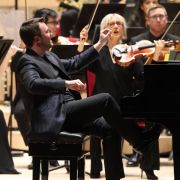
If there's one thing that would characterise concert audiences at Philharmonic Hall, Liverpool, it's the way they welcome back one of their own. So it was when Liverpool-born pianist Paul Lewis returned to the platform to perform Beethoven's challenging and ground-breaking Third Piano Concerto. The welcome and subsequent applause were ecstatic, but what of the performance itself?

Lewis cleverly balanced delicacy with power. While the orchestral opening to the first movement was an exercise in restrained fragility, Lewis' first notes exhibited a supreme and powerful confidence. That confidence seemed to grow right through the entire concerto and yet there was always tenderness when required, coupled with moments of controlled power and exuberance. That came to a climax in the expansive and often ecstatic cadenza.


The Largo was a study in understatement, with both soloist and conductor showing superb control, yet always allowing the composer's thoughts to shine through. And then, in complete contrast, the rippling theme of the Rondo finale burst through. In some ways, this movement was just a little disappointing as it never really seemed to gain momentum. Note perfect, naturally, with balanced and sympathetic orchestral accompaniment but the excitement was not really there.
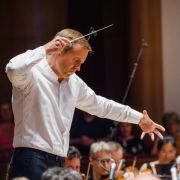
The Royal Liverpool Philharmonic Orchestra was conducted by the 29-year-old Adam Hickox who is rapidly making a name for himself on the international circuit. His approach is sure-footed and the orchestra clearly responded to his wishes, particularly in the performance of Berlioz's Symphonie fantastique. Again, the first movement seemed to be excessively restrained, almost afraid to come out of itself but it did, slowly and surely, come alive. A shapely and graceful depiction of Un Bal followed, with some truly beautiful woodwind solos while the Scene aux champs was another exercise in understatement which made this long movement slightly overstay its welcome.

Naturally, much of the memorable action in this work comes in the two last movements. The Marche au supplice was as pompous as it could be with fine effects from the array of percussion and some electrifying brass statements. The real drama came in the Songe d'une nuit du Sabbat. The woodwind sounded especially satanic, with the brass continuing their sterling contribution and striking moments when the strings played in unison. Add to that the off-stage contributions: the answers to the plaintive cor anglais phrases in the pastoral movement and the bells in the finale made for some magical moments.


A comparative rarity opened the concert, Schumann's Genoveva overture. Like the Symphonie fantastique, the music recalls a gruesome tale which almost becomes a tragedy. Hickox milked the languorous opening for all it was worth. After its steady start, it turned into a glorious triumph, a fitting curtain-raiser to a concert which certainly had its moments.