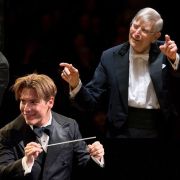
“Mahler is best understood if you are passionate about life,” explained Cincinnati Symphony Music Director Cristian Măcelaru in his remarks preceding Friday night’s performance. Now approaching the close of his first season with the CSO, this ethos of enthusiasm and discovery seemed to inform his colorful program that included Mahler along with Stravinsky. Coincidentally, both works selected were written when the composers were 28 years old – early works that evidence their unbridled youthful ambitions.

Mahler’s tone poem Totenfeier (Funeral Rites) was later revised and repurposed as the opening movement of his watershed Second Symphony. But as a standalone piece, Totenfeier is quite compelling in its own right. Though rougher around the edges than its revision, it documents the aesthetic Mahler was developing before changing the orchestral landscape with his monumental symphonies. Guttural sounds from the low strings began in gripping intensity, coalescing as a remarkably original take on the funeral march. Luscious lyricism contrasted and pastoral interludes punctuated, as would become a key point of tension in the symphonies.


Structurally, the tone poem felt a bit freer and more rhapsodic than its tauter descendent. Without the long-form trajectory of the symphony, climaxes were given with shattering finality. A processional Dies irae was of chilling effect, owing to some particularly robust playing from the brass. Somber moments were had before the final, thunderous descent closed matters full stop, not as a prelude to the glorious resurrection that would come in the symphony.
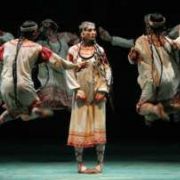
Stravinsky’s Firebird is the work that put him on the map in 1910. Though more commonly heard in its suites, the complete, nearly hour-long ballet score was presented, the first time the CSO has done so since 1981. Adding to the sense of occasion was a collaboration with director Janni Younge who devised a production with more than a dozen dancers who hoisted elaborate puppets, drawing on imagery from her native South Africa. The CSO was seated in a pit so the visual spectacle could take front and center (a less than ideal arrangement in the Mahler, but an understandable trade-off).

Some additional music and sound effects – including a new introduction – were added to Stravinsky’s original by composer Daniel Eppel (better known to some as DJ Eppelsauce), though I found it a bit gratuitous. Still, the visually striking production made for a colorful confluence of cultures. The shimmering white feathers of the bird were as luminous as the music, and at the end, a massive dragon breathed a ball of fire towards the audience – not something one often encounters at the symphony! Sometimes, the production clashed with the music, for instance, when aggressive foot-stomping of the dancers drowned out the graceful Round Dance. But perhaps this conflict and overlapping threads was part of the director’s intent.


It was the CSO under their new Music Director’s baton that won the day, however. They gave their all for a memorable performance of an enormously complex score, which like the Mahler work the preceded, was a product of raw, early-career intensity. The kaleidoscopic orchestration was particularly compelling – Wagner tubas placed in the wings of the stage, sequences for orchestral bells. Măcelaru not only commanded the vast orchestral forces, but managed tight coordination between pit and stage. The iconic Infernal Dance was as thrilling as one could hope for with its pounding bass drum, and in the finale, the horn (Elizabeth Freimuth, in her final season with the CSO) emerged radiant to set in motion a glittering apotheosis.