Like many great festivals, East Lothian’s Lammermuir Festival tends to work through cultivating partnerships with artists, often over a sequence of several years, and the first few days of the 2026 festival have been dominated by the union of two of those partnerships: that with Gateshead’s Royal Northern Sinfonia, and that with American pianist Jeremy Denk.

Both have been keystone artists for the festival in previous years, but this year they joined together to play six Mozart piano concertos (9, 14, 17, 20, 24 and 25) in three concerts over five days. This final concert was the summation of the whole project because it contained the two most dramatically urgent of the set, demonstrating both pianist and orchestra on top-notch form.


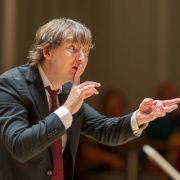
The concertos were jointly directed by Denk from the keyboard and by Maria Włoszczowska from the leader’s position, and the two musicians conspired to produce a sound where every element slotted into exactly the right place and, even in these very familiar pieces, there was a sense of adventure in what was coming next. The RNS played on modern instruments but with period style, with minimal string vibrato and, often, their eyes fixed on Włoszczowska to see where she would take them next. That lent great transparency to the sound, even in the ebullient C major outbursts that open concerto No. 25, but also in the very different, dangerously creeping C minor opening of No. 24, where the strings played with such sleek, beautiful gloss that it seemed to make the music sound more, not less threatening.
Repeatedly, however, the C minor concerto underlined Mozart’s remarkable wind writing, the eight wind players of the RNS sounding like a distinctive choir in the midst of the ensemble. They punctuated the grandeur of the outer movements with lyrical smoothness and they often felt like the prime movers in the central Larghetto, where they sang beautifully against Denk’s chorale-like keyboard playing. Variously, Denk could spar, pacify or dance with the orchestra and his playing had a sense of the exploratory as though not even he was quite sure what was around the corner. His cadenzas, however, (his own, I presume) seemed to be plucked out of thin air and even there he had an eye on Włoszczowska so that this wasn’t him dominating the drama so much as passing on the baton to another performer.


The violent drama of No. 24 was replaced by grandiose majesty in No. 25, though here too Denk’s keyboard felt like a foil to the orchestra, answering the orchestra’s exposition with what felt like a louche smile, before punchy chords that seemed to be an extension of the orchestral sound, never losing sight of the tremendous energy of the inner textures. True, the slow movement sounded a little languid, but the Rondo finale had a lovely bounce and there was an attractive twinkle to the piano as it led the ebullient final bars.
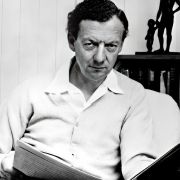
All three of these concerts featured a 20th-century complement to Mozart; here it was as agile and invigorating a performance of Britten’s Variations on a theme of Frank Bridge as you’d ever wish to hear. Włoszczowska gave the strong impression that she had thought extremely deeply about the piece and thus managed to bring each variation to life with a sense of both drama and delicacy, the orchestra having a whale of a time in the central pastiche moments but achieving intensely powerful dramatic punch in the concluding fugue.