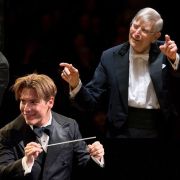
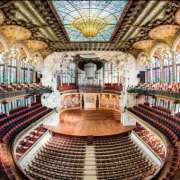
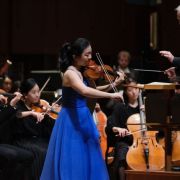
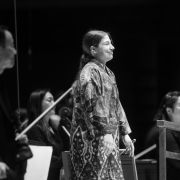
The Philadelphia Orchestra last performed Amy Beach’s Symphony in E minor, “Gaelic” in January 1919, a year before women’s suffrage became enshrined in the US constitution. The work returned to the repertory this week in a nod to Women’s History Month and to the outfit’s efforts in promoting parity in programming. No one would argue there isn’t still a way to go in that department – this season’s schedule features only five female composers, and the Beach is the only work labeled a symphony – but its rediscovery is a cause for celebration in its own right. As they’ve done with numerous works by Florence Price, Yannick Nézet-Séguin and the orchestra captured the various moods of each movement, highlighting a uniquely individual sound world.


Musicologists have drawn comparisons between Beach’s sole symphony and Dvořák’s Ninth, which uses the same home key, although Beach’s influences stretched more toward Appalachian folk music and art songs. Still, the first movement of both works share a stormy quality that ultimately resolves in a sunny, spritely manner. Nézet-Séguin guided the listener through the emotional turmoil, keeping the tempo brisk with weighty strings, intense horns and menacing woodwind figures.
It felt like a genuine relief, then, when the massed forces dropped out to allow for a lilting clarinet solo. The violins rejoined the action with a sunnier quality, the brass now exultant rather than ominous, before shifting right back to a sense of overwhelming insistence. In the second movement, Principal Oboe Philippe Tondre and the bassoons teased out a folksy quality that evoked Scottish bagpipes, and Concertmaster David Kim’s leisurely, expressive solo in the third reminded the listener of a jig. The concluding Allegro sounded somewhat unwieldy, but not without character or gripping intensity.
Although Beach’s work occupied the prime position, the concert bore the fantasy title of ‘Liszt’s Piano Fireworks’. It felt somewhat ironic, considering the composer’s Second Piano Concerto is far less showily virtuosic than his First, but when you have Marc-André Hamelin on hand, everything has a way of sounding brilliant. Although Hamelin sailed up and down the keyboard with ease, his interpretation was notable as much for its repose as its dexterity. Rarely has the piano in Marian Anderson Hall sounded so rich and enveloping, yet with a distinct delicacy to its tonal beauty. Likewise, Nézet-Séguin shied away from excess in the orchestral complement, with the woodwinds sounding especially light and transparent. A duet between Hamelin and Principal Cello Hai-Ye Ni was especially ravishing.


Hamelin’s performances often leave the impression of hearing familiar music with fresh ears. That was certainly the case with his encore, the Allegro from Mozart’s C major Sonata. His free deployment of rubato rendered the short and simple tune almost like a theme and variation, with as much invention as when Stravinsky repurposed the same melody in The Rake’s Progress.
The evening’s only disappointment was the Overture to Weber’s Der Freischutz that opened the concert. Perhaps the orchestra was worn out after four performances of Mahler’s Second Symphony and a trip to Carnegie Hall. Entrances were rarely as clean as they should be in such a familiar work, and a few noticeable cracks among the horns were worrisome. Moreover, the performance had a shapelessness that suggested Nézet-Séguin hadn’t yet decided whether to prioritize radiant Romanticism or taut propulsiveness.