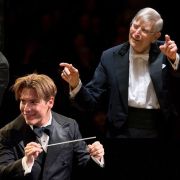
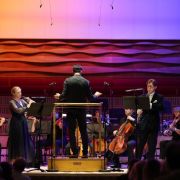
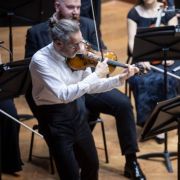
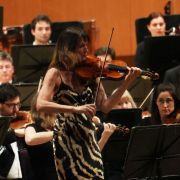
The BBC Philharmonic Orchestra’s new season started with a concert under its Chief Conductor John Storgårds in the tried-and-tested format of overture–concerto-symphony, but that was the only conventional aspect of the evening. The symphony was the Fifth of Sibelius. Storgårds is a noted exponent of his compatriot’s music but I have not always been convinced by his Sibelius – until this evening. This performance took my breath away. Everything came together perfectly, from the opening horn calls to the unique series of chords that conclude the piece. It may be a familiar repertoire work but it felt as if I was hearing it for the first time.

Storgårds ensured that the many orchestral solos shone through – a fine bassoon and key contributions from trumpet, flute and horn in the first movement. He avoided the trap of making the symphony overly solemn; there was plenty of light as well as darkness. The build-up and release of tension, even in small phrases, was gripping. Excitement could arise seemingly out of nowhere.


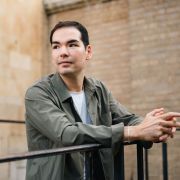
The concert began atmospherically with the Act 1 prelude from Wagner’s Lohengrin. The quiet, high strings gradually surging to a full orchestra in a Romantic idiom proved a complete contrast to what followed, for the concerto was Breathing Forests by American composer Gabriella Smith, premiered in 2022 by the Los Angeles Philharmonic and this evening’s soloist, organist James McVinnie. The BBC Philharmonic and McVinnie gave a virtuosic performance of this amazing new work.
Smith is an ecologist as well as a composer and many of her works relate to her experiences of the natural world. She writes, “Breathing Forests is a reflection on the complex relationship between human, forests, climate change and fire.” She transposes into music her deep understanding of the importance of fire for the regeneration of forests as well as the problems created by climate change and human intervention.
Breathing Forests follows the traditional form of fast–slow-fast but these three movements are played without a break and are retitled Grow-Breathe-Burn. It began with skittering strings, the first of many unfamiliar sounds that characterised this work. The strings were soon joined by other instruments and the organ, bringing to my mind the sounds of animals and birds. Later we had other unexpected noises: tinkling water, wind creaking and perhaps wood burning. It was often impossible to say what they represented or which instruments had created them, using novel or unusual techniques.


Breathing Forests is not just a series of sound effects, though; they are only one aspect. There were many more traditional musical elements from the orchestra and organ which were frequently pleasing to the ear if in an unexpected way and I felt that there was a structure behind the work even if I could not fully grasp it. In the slow central section we heard the mesmerising sounds of the forest breathing gently but this developed into something loud and harsh – perhaps the destruction of a forest. The organ played a crucial role but the piece did not feel like a concerto in the traditional sense. It often combined with the orchestra but rarely dominated and there were no solo cadenzas. This evening’s programme note referred to the piece as “a sonic forest, growing, breathing, burning and regenerating” which helped me understand it, but perhaps only repeated listening will reveal its further mysteries.