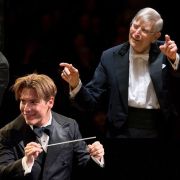
Aficionados talk about Anthony Negus in hushed tones. The renowned Wagnerian once assisted the likes of Reginald Goodall, Charles Mackerras and Pierre Boulez and worked at Bayreuth. As Music Director at Longborough since 2001, he put the festival on the map, including acclaimed Ring cycles, earning it the moniker “the Bayreuth of the Cotswolds”. Negus turned 80 last month, when he was decorated with a CBE in the King’s Birthday Honours. In his final summer as MD – he takes on the Conductor Laureate mantle from 2027 – he is conducting an opera that is similarly revered, Tristan und Isolde.

Although Negus was a protégé of Goodall, he’s certainly no slouch in the pit. His style – I could spy him from my seat on a monitor – is energetic, arms well above his head, tracing a batonless, fluid beat. His tempi were often urgent, drawing muscular playing that bristled with tension. A seating capacity of 500 – less than Wigmore Hall, temple of chamber music – means that imperfections can be exposed, such as the approximate violin intonation in the very opening phrase of the Act 1 prelude, but the playing of the Longborough Festival Opera Orchestra was superb, still surging and swelling six hours later in the concluding Liebestod.


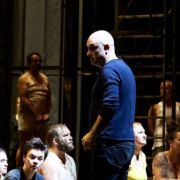
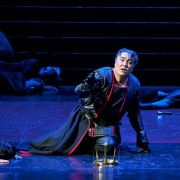
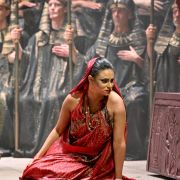
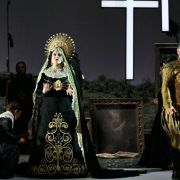
The staging is by Carmen Jakobi, Negus’ wife. When it was new in 2015, it featured dancer doubles and was criticised for its visual clutter. The dancing was jettisoned two years later and the result is largely abstract – much of the action in Tristan is psychological anyway – stripping the work down to its bare essentials. Kimie Nakano’s frugal designs – black blocks as barque, tower and rock – are a nod towards Japanese theatre, and props are at a bare minimum: a box of potions, a torch, swords. Ben Ormerod’s lighting plot projects colour onto a huge sail of a backcloth: cool blue, lilac, sickly green or the glow of dawn breaking. A silhouette suffices for Kareol, Tristan’s castle.

Unshackled by any directorial concept that leaves the audience scratching their heads, the production’s simplicity focused the attention onto the singing, much of it remarkable. Peter Wedd hurled himself into the role of Tristan, which he created in this production in 2015. His sound is very baritonal, forceful and rarely below a mezzoforte dynamic, but his athletic, thrusting portrayal was admirable, particularly his tour de force as the crazed, dying man of Act 3.
Opposite him was the magnificent Isolde of Catharine Woodward, at their rapt best in the orgasmic length of the Act 2 duet, he unpinning her hair for “O sink hernieder, Nacht der Liebe”. Woodward’s soprano is attractive and powerful, evenly produced across the registers, with thrilling top notes that have force, but are focused. She was still sounding fresh in the radiant Liebestod.


Catherine Carby’s Brangäne, another 2015 survivor, was classily sung, particularly her haunting off-stage warning to the lovers in Act 2, while Robert Hayward’s gnarly Kurwenal was deeply felt, his relationship with Tristan extremely touching. Alastair Miles’ beetle black König Marke snarled effectively, Brian Smith Walters spat his consonants venomously as Melot and I enjoyed Peter Bronder’s sympathetic turn as the Shepherd.
A fine achievement and one to satisfy even the most demanding Wagner pilgrims who had journeyed from far and wide to the Cotswolds.