What is the collective noun for timpanists? A ‘rumble’ or a ‘thunderclap’ would be apt. For their BBC Proms concert, the London Symphony Orchestra assembled ten players – and 20 timpani – for Berlioz’s mighty Requiem, the Grande Messe des morts, and the terrifying rumble they and the three bass drums produced in the Tuba mirum induced goosebumps. If the UK government’s emergency heatwave alert had been sent to our mobile phones this evening, rather than on Friday, there’s a fair chance most of us would have missed it.

No composer in the 19th century orchestrated on such a lavish – and impractical – scale as Hector Berlioz. With an enormous panoply of instruments, including four brass choirs, four tam-tams and eight pairs of cymbals, plus a huge chorus, his Requiem needs a vast space. The Barbican is simply not an option for the LSO. When Sir Antonio Pappano’s great Berliozian predecessor Sir Colin Davis last conducted it, they used St Paul’s Cathedral.


The Requiem was premiered in the Chapel of Les Invalides in 1837, the tallest building in Paris at the time, but the Royal Albert Hall could have been designed to accommodate its vastness. With two brass choirs lined up behind the timpani barricade and two more behind the massed forces of the London Symphony Chorus and BBC Symphony Chorus in the Choir seats, some 400 musicians were spread across the performing space.
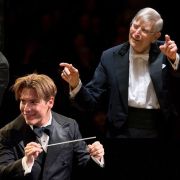
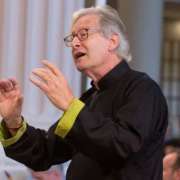
And they made a tremendous noise, staring down the brassy Day of Judgement defiantly, tam-tams crashing spectacularly in the Lacrimosa, trombones growling like dragons in the Hostias. Pappano is an experienced conductor of epic Berlioz (Les Troyens at Covent Garden in 2012) and this performance had an operatic force that frequently thrilled. But that would be to undersell his achievement here because, moulding the music with batonless gestures, Pappano was as concerned with the score’s moments of reflection and hushed despair as the bombastic ones.

The colours he drew from the LSO – oaky violas at the opening, the angelic sheen of the violins, the woodwind choir’s nasal blend – were lovingly tended and the celestial shimmer of the brushed cymbals in the Sanctus prickled the skin.


The two choirs were excellent (the tenors undernourished in terms of numbers), blending beautifully in the Quaerens me, sopranos angelic in the Domine Jesu Christe. They were tireless too – unlike other Requiems where a quartet of soloists hog the limelight, here they carry much of the burden. The exception comes in the Sanctus where French tenor Julien Henric, standing behind the bust of Sir Henry Wood, delivered his solo with heady, plangent tone before the choirs brought the work to a heavenly repose in the Agnus Dei. A Proms performance for the annals.