From London, where he is in the final stages of shaping his new work for English National Ballet, choreographer Jae Man Joo reflects on the path that has led him here. In 1996, Joo left Seoul for New York City – three decades later he is one of the rare Korean-born choreographers in the diaspora sought after both in Korea and abroad, and the first to be commissioned by a leading UK company. “This feels very special,” he says when we speak over email. “I am honoured.”

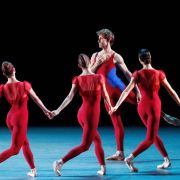
A longtime principal dancer with New York-based Ballet Hispánico and Complexions Contemporary Ballet – the latter known for its sensuous, explosive repertoire and the unmatched diversity of its dancers – Joo began choreographing for Complexions and would go on to make work for Ailey II and other companies in the US and Korea. This season will see his work presented on both sides of the Atlantic: a solo from an older work, Flight, to be danced by Herman Cornejo at American Ballet Theatre, and the new Auguries of Innocence for ENB.
While Joo’s work is solidly in the contemporary ballet vein, he acknowledges the influence of his early training in Korean traditional dance, whose emphasis on upper-body movement, breath and the expression of “inner peace or sorrow” captivated him.
A preoccupation with nature surfaces repeatedly – in Goodnight, for example, a work for Complexions inspired by a 15th-century Korean landscape painting of a secret utopian community hidden in a peach grove in a remote mountainous land. And in VITA, a work for Wise Ballet Theater that, as one Korean critic observed, “incorporates the Korean view of nature, which does not forget that human gesture and human life are part of nature.”


Across much of his work we see the contrast between the pulled-upness of classical ballet and a downward thrust of the body’s weight, fluid spinal articulation, circular movements in long phrases, sudden jagged transitions and brief explosive outbursts. In intention, too, we sense expressions of interiority more than virtuosic display. Joo says he encourages his dancers to “bring their own life experiences into a work.”
A preference for abstraction faced an extreme test when Gwangju City Ballet asked Joo to tackle the 1980 uprising in his hometown. He was initially “quite apprehensive” he says, about conveying through dance a tragedy of such magnitude. The mass uprising against dictatorship ended in a military massacre, with estimates of the civilian dead reaching 2,300. The backlash helped propel South Korea toward democracy and inspired democracy movements elsewhere in Asia.
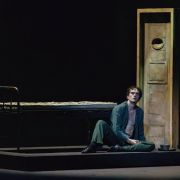
Drawing on childhood memories and emotions, Joo set out to honour those who died and the families they left behind. But rather than reconstruct the Gwangju Uprising, he built the full-length Divine around abstracted emotional and political themes. Bloodshed, violence and death are not re-enacted – suffering and acts of heroism are distilled into something more universal.
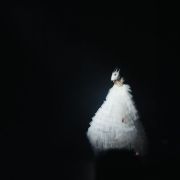
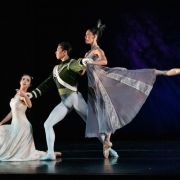
Works like Divine and A Midsummer Night’s Dream for Seoul Metropolitan Ballet paint humanity grappling with large, inexorable forces amid vast landscapes. Sometimes the dancers’ bodies in motion assume organic and inorganic forms, as if they too are part of the landscape.

Finding inspiration for his latest work in William Blake’s Auguries of Innocence, Joo noted the poet’s language “rich with symbolism, sharply criticising cruelty, corruption, and environmental destruction.” Mapping the microscopic onto the infinite – a world projected onto a grain of sand, an hour into eternity – Blake reminds us that nothing is truly small, that even small acts of cruelty or compassion accrue cosmic consequences. The poem, says Joo, “beautifully captures the deep connection between nature and humanity... and reflects what we are living through right now.”
Blake’s poetry “addresses themes of morality, justice, and the interconnectedness of all life,” Joo says. “Each word is symbolic, critical, and impactful. Through dance I seek to highlight the human yearning for a better, unified world free from the complexities and corruption of our current society.”
A continuity of spirit is felt in Joo’s choice of music by contemporary Latvian composer Pēteris Vasks, who has come to be a voice of resistance – against a succession of oppressive political regimes and against the encroaching forces of environmental destruction. The two pieces chosen for Auguries of Innocence seem to layer personal grief, grief for a nation and for a world, finally reaching an elusive haunt of ancient peace. “When I listen to his music,” Joo says, “I hear nature crying out, mourning what humanity has lost.”


Between these two compositions, Joo throws in a hypnotic drum performance from 2023, recorded by the famous Korean Buddhist monk Gogeum who is actively engaged in social justice movements. The music evokes a shamanistic ritual in Korea, Joo explains, in which drummers attempt to mediate between the human and spiritual realms.
Against the backdrop of this singular musical canvas, infused with both the apocalyptic and the serene, how does Joo translate Blake’s plain-spoken, terse yet incantatory language into dance?
In cryptic glimpses of rehearsal caught on video, I was most struck by ensemble movements that in some passages resembled injured birds with broken wings – their struggles to regain the air almost terrifyingly sad. In others, movements were sharply mechanical, arms moving frantically like pistons, like failing machinery. At one point, Joo demonstrated a clipped wing movement with a sharp sideways tilt, pointing out that it didn’t necessarily need to look the same on everyone as long as the intention was the same.
“It’s not meant to be pretty,” Joo explains. “It’s almost like you cannot breathe.” I thought of the paradox of dancers in peak athletic condition, capable of near-superhuman feats, enacting injury and wide-scale ecological damage. Joo has spoken about being deeply moved when he first saw Pina Bausch’s Nelken, with its field of carnations patrolled by humourless men with German shepherds, demanding papers and subjecting dancers to humiliating feats of dance. “The dance was so pure, joyful, and at the same time, very deep, painful, expressing many different emotions,” he recalls.

Amid the damaged world in Auguries of Innocence, a central figure repeatedly drifts across the stage. Joo calls them the Weaver of Souls: “a spiritual presence who moves between the visible and the unseen – a keeper of the invisible threads that bind all living things... Each [thread] carries the traces of where it has been: love and loss, memory and longing, joy and grief, death and rebirth. Across time, these threads cross, separate, become tangled, break apart, and find one another again. Through the sacred act of weaving, broken threads are drawn together. Wounds become pathways toward healing... What has been forgotten is remembered.”
This idea of sacred weaving is set against bodies struggling for breath, broken wings and failing machinery. For all the cruelty and environmental destruction Joo finds reflected in Blake’s poem and in our own time, Auguries of Innocence, he says, ultimately holds out hope for “a gentler, more connected world.”
Jae Man Joo’s Auguries of Innocence is performed by English National Ballet at Sadler’s Wells from 24th September.
See upcoming performances by English National Ballet.
This article was sponsored by English National Ballet.