

Amid one of the most tumultuous and consequential midterm elections in recent years, Thomas Hampson is in Washington DC. He is in the heat of preparations for Nixon in China, in which he sings Richard Nixon. It’s an appropriately charged moment to be stepping into the shoes of this strange and enormous political individual. The opera’s subject, he says, has lost none of its relevance. “The longer it lives, the more seriously it’s taken.”

For most of this year, Europeans have puzzled over how to respond to the 250th anniversary of the founding of the United States. As a self-described “half European”, Hampson understands this unease well. Nixon in China has proved to be at least one potentially fruitful avenue, capturing the world consequences of US politics in all their roiling contradictions. “It has a surprising, powerful, obtuse and ambivalent intimacy. We are invited to come out of the intoxication of the epic and spectacular, and confront these people believing themselves to be doing important, real things in their time in civilisation.”
After appearing in the Paris production earlier this year, Hampson will sing Nixon for several Washington performances, followed by stagings in Valencia and Milan. The opera’s achievement, he argues, is its ability to counterpose the personal and the authoritarian. “There’s a kind of humanisation, which stands in juxtaposition to this massive authoritarian machina that they put on top of their people,” he says. “There’s a lot of sexual jealousy as well.”
But in between the Nixons, Hampson makes a return to Europe to sing music that has preoccupied him for almost 40 years: Mahler’s Des Knaben Wunderhorn, which he sings at Andermatt, Zurich and St Gallen in November and December. It is arguably Hampson’s signature repertoire.
Is it such a big leap from opera house to concert hall? Hampson recalls Leonard Bernstein’s response when someone lamented that Mahler had never written an opera: “Oh no, he wrote 50 of them.” The songs are compressed dramas worthy of the stage, he says. Each is “a cosmos and existence in and of itself… they’re extremely cinematic, extremely visual”.


He is quick to correct one common misnomer: “It’s not a cycle; it’s a collection.” For Hampson, the songs’ individuality and separability is crucial. “There’s an immediate variation, an intense individual attention to each one of these poems.”
The musicologist in Hampson is quick to mobilise. The only cycle Mahler wrote in the strict sense, he explains, is Kindertotenlieder. The Wunderhorn songs, by contrast, were composed over a longer period, between 1892 and 1901, and underwent distinct transformations: some beginning as songs with piano, some later acquiring orchestral versions, while material from several found its way into the symphonies.
Hampson launches into a discussion of the origins of their texts: how the anthology, assembled by Clemens Brentano and Achim von Arnim, grew from an interest in preserving German folk poetry encouraged by Johann Gottfried Herder. “What Herder was looking for is the stuff that lasts through the generations: the stories, the fables, the fairy tales,” he explains. “What did grandma pass down?”
He is also forthright in his defence of the Mahler’s literary credentials, as a voracious reader and an artist who might have easily pursued a literary career. Hampson rejects any assertion that the composer was inattentive to the Wunderhorn texts. Such criticism is “complete rubbish. Nothing could be farther from the truth”. Mahler understood that the poems were themselves products of artistic transformation, and approached them on that basis.
“I’ve been singing these damn things for 40 years,” he laughs. Their capacity to surprise remains undiminished, and he recalls a recent rehearsal where the musicians stopped to reflect on how fresh the music still felt. “It’s like visiting old friends.” He approaches the collection as a kind of Mahler autobiography, revealing the composer as “the wise uncle”, or as a perpetual outsider.
Switzerland is also more than a concert destination for Hampson, who spent three decades as a leading baritone at Zurich Opera, joining its ensemble in 1984. “Switzerland has been a huge part of my life and remains so,” he says. He recalls the opera house’s reopening in December that year, when he appeared as its youngest ensemble member.
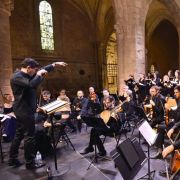
The project beginning in November brings him together with the Swiss Orchestra and its conductor Lena-Lisa Wüstendörfer, herself a Mahler scholar and a protégé of Claudio Abbado. “We’re very honoured that Thomas Hampson is giving us the gift of his Mahler,” Wüstendörfer says. “I’m especially excited to perform Das himmlische Leben, as some of my research work on Mahler centred on the Fourth Symphony, which this song forms an integral part.”

Wüstendörfer’s musicological mindset is close to Hampson’s own. For him, the secret to meaningful performance is for musicians to understand music as an expression of its originating culture. “I’ve always loved and believed in songs as evidence of the cultures and epochs they come from, for the exploration of the intimacy of their language.”
This belief in the value of song as a window into culture extends to reviving neglected repertoire too. The programme with the Swiss Orchestra includes Three watercolours, a collection of songs by George Templeton Strong, an American composer who spent much of his life in Switzerland. (He was the son of the well-known US civil war diarist of the same name.) Strong’s three French songs are presented with their original orchestration, in a new edition created especially for this project. Wüstendörfer says that this may be the first time they have been presented as a trio in complete orchestral form.


Hampson had previously encountered Strong’s orchestral music through a recording passed on by a colleague in Zurich. “My goodness, this is terrific music,” he remembers thinking. Hampson calls them “really quite beautiful”, their settings of Verlaine and Henri Pourrat invoking the cultural atmosphere around the turn of the 20th century.
“We felt very gratified to be able to offer the gift of these songs, and we’re moved that Thomas Hampson has adopted them into his repertoire,” Wüstendörfer says. “One of the major tasks of the Swiss Orchestra, as I see it, is to revive music by Swiss composers. And despite being born in America, Strong is very much an adopted Swiss, becoming a Genevan citizen himself.”
There is a personal resonance in reviving this repertoire too: Hampson, like Strong, is an American musician whose artistic life has been enormously shaped by residency in Europe. Aside from frequent performances, he continues to teach at the University of Heidelberg, where he is artistic director of the Heidelberg Lied Academy.
Bachtrack aficionados might also appreciate Hampson’s continuing, old-school faith in the educational value of the web. The Hampsong Foundation, launched in 2003, has grown into a sprawling web resource for performers and listeners to vocal music and art song. Its spin-off Song of America platform is an invaluable route into American art song and poetry.
He is especially pleased that the platform has been reaching listeners curious about music they may have heard at public events this year, associated with the US’s 250th anniversary. “Whenever a song gets sung, we’re one of the first places people go to ask, ‘What the hell was that?’”
It’s an educational mission that aligns with Hampson’s thinking about this acute political moment. “This may seem naïve, but I really believe the answer to most of our frustrations today is the arts and humanities, and education.” He worries that the speed of technological change and disruption is eroding the capacity for reflection. “The great educational question of our time is not how we make human beings more efficient. It’s how do we help human beings remain fundamentally human, inside of a technological civilisation.”
“We must understand and get our heads around the difference between culture and realpolitik,” he says. Politics is rapid and volatile; culture offers something deeper and more concerted – or at least, it should. “What I like to believe I’m doing is showing how music can help any particular culture, but especially our own, understand itself better.”
Increasingly selective about his appearances, Hampson says he doesn’t want to “overstay” his welcome, with teaching and the foundation taking up more of his time. But his curiosity about the repertoire remains undiminished. Whether it’s inhabiting Nixon or continuing his love affair with Mahler, Hampson is continuing to probe what music is capable of illuminating about our ever-accelerating society.
Thomas Hampson sings Mahler’s Des Knaben Wunderhorn with the Swiss Orchestra in Andermatt, Zurich and St Gallen from 29th November to 6th December.
See upcoming performances by the Swiss Orchestra and Lena-Lisa Wüstendörfer.
See upcoming performances by Thomas Hampson.
This article was sponsored by Andermatt Music.