Though grouped under the same title, Bach’s six Brandenburg Concertos showcase the sheer inventiveness and variety of his imagination. Composed for an extraordinary range of instrumental combinations, they present not one homogeneous musical world but six, from the ceremonial brilliance of the hunting horns (corni da caccia) to the mellow sonority of the lower strings. Hearing them together is both a celebration of Bach’s ingenuity and a test of an ensemble’s ability to make each concerto speak in its own distinctive voice. For Bach Collegium Japan, the challenge was not simply to deliver six masterpieces, but to reveal the individuality of each while preserving the sense of musical conversation that binds them together.


Opening with the Fourth Concerto, with its solo violin and recorders, the BCJ immediately captured the music’s lightness and intricate dialogue with elegant restraint. The recorder lines floated above the darker hues of the period violin, creating an almost weightless texture. The National Concert Hall proved a rather cavernous space for such intimate exchanges, the chamber-music effect in danger of dissipating in the expansive acoustic. Yet there was no doubting the precision of the interweaving melodies or the sheer pleasure of hearing such intricate music brought to life.
The evening’s contrasts were often subtle but telling. The warm sonority of the violas in the Sixth Concerto, set against the more wispy lines of the viola da gamba, contrasted with the brilliant, penetrating sound of the natural trumpet in the Second. Some of the trumpet’s more exposed high notes proved less secure, with occasional intonation difficulties interrupting the otherwise lively exchanges between the soloists. Elsewhere, the airy flute melody in the Fifth offered a pleasing contrast to the velvet-toned oboe in the Second, while the mellow depth of the natural horns in the First Concerto was immediately appealing, despite occasional lapses in intonation.
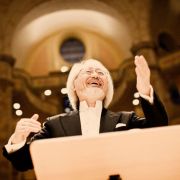
Harpsichordist and director Masato Suzuki was a reassuring presence throughout, maintaining a fine balance between soloists and accompanying instruments. With economical gestures, he cued entries and shaped phrases, his leadership unobtrusive but assured. His harpsichord playing was exceptionally precise and well-shaped, while his lengthy cadenza in No. 5 was thrillingly virtuosic, its scales and arpeggios dispatched at breathtaking speed. The cadenza momentarily transformed the concerto into something approaching a keyboard concerto, shifting the balance decisively towards the harpsichord.


The period instruments brought a distinctive edge to Bach’s writing. The violin, in particular, had a more direct, less polished timbre than its modern counterpart, lending the music a certain rawness. Yet its sharper articulation also brought clarity to the intricate interplay of musical lines in Concertos 3 and 4.
Despite the frequent changes in musicians across the six concertos, the BCJ maintained remarkable rhythmic energy and a compelling sense of musical dialogue. The fugal finale of the Fifth Concerto had plenty of drive, its imitative lines swaggering along with infectious momentum. In the First Concerto, the return of the hunt brought a palpable sense of play and excitement, the quick-fire exchanges between instruments delivered with great aplomb.
This concert left us in no doubt as to Bach’s inexhaustible imagination. The BCJ brought wit, precision and rhythmic vitality to these six contrasting works, allowing each to retain its individuality while illuminating the musical ingenuity of the whole.