| Year of birth | 1685 |
| Year of death | 1750 |
| Nationality | Germany |
| Period | Baroque |


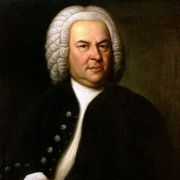
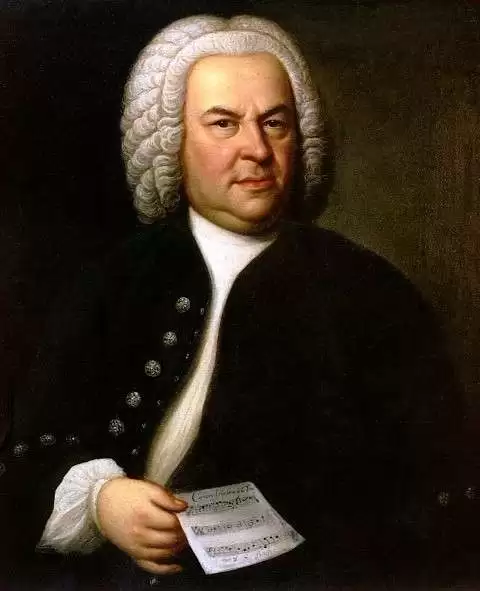
German composer whose superlative musical intellect and deep artistry have won him an acknowledged position among the highest of human achievers and as a guardian of the fundamental qualities of music, as if it were a divine framework that has existed since time began.
He was born in the Thuringian town of Eisenach into a sprawling family in which many of his male relatives were musicians working in the Lutheran churches, courts and municipalities of central Germany. After singing at school and studying with an older brother, his first paid post was as a violinist in Weimar in 1702, but within months he had obtained an organist’s position in Arnstadt, and it was there and subsequently at Mühlhausen that he acquired a reputation as a virtuoso keyboard performer. Six years later he returned to Weimar as organist to the ducal court, where the composing of church cantatas and instrumental music was added to his duties. In 1717 he moved to assume the post of music director to the court of Prince Leopold at Cöthen, and it was there, where there was a fine orchestra, that he composed much of his orchestral, chamber and solo harpsichord music.
His final move came in 1723, when he took up the job of Kantor at St Thomas’s in Leipzig, which among other things required him to provide music for services at the city’s main churches. It was a prestigious post which offered important opportunities – in his first five years there Bach executed a cherished project to write 300 cantatas for the liturgy and also composed his two great Passion settings, the St John and the St Mark – but there were professional frustrations too, and he often clashed with his employers. In the 1730s he found comfort in the publication of keyboard works (including the monumental Goldberg Variations), and began to gain some recognition further afield. His last decade saw him increasingly concerned with organising and revising his earlier music into sets or larger works – the most substantial example being the Mass in B minor – and working on semi-didactic collections such as the masterly contrapuntal compendia The Musical Offering and The Art of Fugue.
In historical terms, Bach’s music, with that of Handel and Telemann, represents the pinnacle of the High Baroque, assimilating the formerly competing French and Italian styles into a new and distinct ‘German’ manner. Yet, like all the greatest artistic legacies, it lives free of its time – intellectually gripping, spiritually profound, intelligible and satisfying to all.
Profile © Lindsay Kemp 2026