All countries have national stereotypes when it comes to the music they produce, but perhaps no other country can rival Spain when it comes to bringing those stereotypes to vibrant life. This concert by the Orquesta Sinfónica de Galicia had the lot: explosive rhythms, flamboyant dance forms, passionate melodies, exotically colourful orchestration, all underpinned by the sound, literal or metaphorical, of the guitar. It should be said at the start that the Sinfónica de Galicia is probably not one of the world’s great orchestras, but what this concert occasionally lacked in finesse it more than made up for in the wholehearted commitment of these players to the communication of their country’s soul in music, and it’s some considerable time since a visiting ensemble elicited quite such a raucous and excited response from the Sheffield public.


At the heart of the concert was the most famous guitar concerto of all, Rodrigo’s Concierto de Aranjuez. In the decade since he started accumulating prizes and prestigious residences, Thibaut Garcia has become one of the world’s leading guitarists, and his performance showed exactly why. The outer movements had both rhythmic clarity and meticulously clear passagework, Garcia dovetailing fluently with soloists from the orchestra, skilfully marshalled by conductor Roberto González-Monjas. But inevitably it’s the slow movement that touches the heart, and though one might think the guitar line was occasionally over-ornamented here, Garcia and the orchestra’s cor anglais player mined the deep seam of grief at the core of this music with real sensitivity. Garcia’s encore was a smouldering performance of Albeniz’s Asturias from the Suite española.
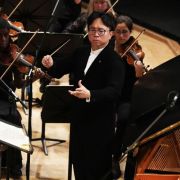
Inevitably, music by Spanish composers made up most of the programme. Galician composer Fernando Buide’s Ruada, newly commissioned for this tour, was a five-minute scene setter, a taste of the sound world of Galician festivity that was to return at the end of the programme. The second suite from Falla’s The Three-Cornered Hat stomped its way jubilantly across proceedings, revealing in the process two things: that this orchestra is at its fiery best when given its head, and that conductor Roberto González-Monjas, with his uniquely windmilling conducting style, has built an intense connection with his players.


The least familiar piece on the programme was Joaquín Turina’s Sinfonía sevillana. More a three-movement symphonic poem than a traditional symphony, it received a performance which unpicked the work’s occasionally dense orchestration, lingering over the smouldering second movement, Por el rio Guadalquivir, before bursting into exhilarating life in the final Fiesta, in which the dance rhythms of the Zapateado and the Garrotin tumble over each other towards its percussive conclusion.
Maurice Ravel was not Spanish at all, although his mother was, but his deep connection with Spain in his music meant his works were not out of place here. The one wholly non-Spanish work, the Mother Goose Suite, showed the orchestra can do tenderness too, with The Fairy Garden being beautifully realised. Inevitably, though, it was Ravel’s Boléro which brought the house down, a fascinating demonstration of the orchestra’s individuality. One expects the saxophone and trombone solos to ‘bend’ their themes a little, but it was striking that right from the flute’s opening melody each of the woodwind players in turn put their personal stamp on Ravel’s writing. After its shuddering climax, there was just time – the concert overran the conventional timing by a good 30 minutes – for a celebratory encore: arrangements of two Galician folk songs to send both orchestra and audience on their way home warmed to the core.