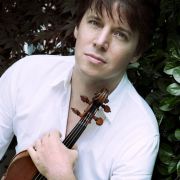
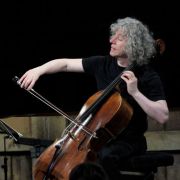
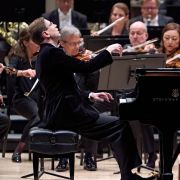
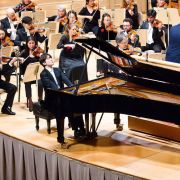
The pitfalls of celebrity chamber music encounters are well known: individual distinction does not always translate into collective success. At Carnegie Hall on Sunday afternoon, Evgeny Kissin, Joshua Bell and Steven Isserlis proved otherwise. In a programme that traced a path from Solomon Rosowsky's evocation of Jewish musical traditions through Shostakovich's wartime lament to Tchaikovsky's monumental memorial to a friend, the three musicians found common ground among works whose underlying connections gradually came into focus.

A true rarity, Rosowsky's Fantastic Dance on a Hebrew Theme began the afternoon with an evocation of Jewish folk traditions, a musical world that has long held special significance for all three performers. The trio approached the work without affectation, allowing its shifting moods and dance rhythms to emerge naturally. Bell's luminous tone and Isserlis's characteristically vocal phrasing found a natural complement in Kissin's rhythmic clarity and rich palette of colour. More than a curiosity, the composition served as a compelling introduction to the themes of memory and identity that would resurface in the works that followed.


The Jewish thread returned in darker form in the finale of Shostakovich's Piano Trio no. 2 in E minor, where dance rhythms are transformed into expressions of grief and bitter irony. Composed in 1944 following the death of his close friend Ivan Sollertinsky and amid growing awareness of Nazi atrocities, the work balances private mourning with a broader sense of historical tragedy. Isserlis' opening harmonics emerged with a certain reticence, setting in motion a reading that unfolded with cumulative force rather than overt dramatisation. The Scherzo's restless energy was projected with sharp rhythmic definition, while the slow movement's long lines sustained a mood of quiet desolation without lingering unduly on grief or sacrificing momentum. Throughout the performance, Bell favoured a more generous, almost Romantic tone, while Kissin brought an angular edge to the score's abrupt shifts of mood and texture. Rather than smoothing over the work's emotional fractures, the musicians embraced them, bringing equal conviction to moments of biting sarcasm and profound sorrow.

Tchaikovsky's Piano Trio in A minor brought the three musicians into their most convincing alignment. Written in memory of Nikolai Rubinstein, the trio, like Shostakovich's, grew out of personal loss, although Tchaikovsky's response is more expansive and ultimately more consoling. The opening Pezzo elegiaco found an effective balance between intimacy and breadth, the principal theme passing naturally between violin and cello, its expansive lyricism never overstated. The sprawling variation movement was equally impressive, each episode vividly characterised while remaining firmly connected to the larger arc. In the more introspective variations, Bell and Isserlis brought tenderness and a conversational ease to their exchanges. Lighter variations brought buoyancy and wit, providing a necessary counterweight to the work's prevailing elegiac tone. The fugal variation revealed notable contrapuntal precision, while the solo piano mazurka allowed Kissin to showcase his trademark combination of brilliance and sense of proportion. When the opening theme returned in the closing pages, the musicians resisted sentimentality, allowing its emotional weight to speak for itself.


As an encore, the trio offered the Andante con moto tranquillo from Mendelssohn's First Piano Trio. Played with unaffected warmth and simplicity, it served as a gentle coda to the main programme.