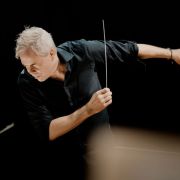
Nathalie Stutzmann understands Mahler’s Resurrection Symphony not only from the vantage point of the conductor’s podium, but also from the singer’s perspective. Prior to devoting herself to conducting, she had a distinguished career as a contralto, performing the vocal role in the Mahler work many times – including on a recording conducted by Seiji Ozawa. In a panel discussion I attended, she recalled sitting among the orchestra during those performances and imagining what it would be like to one day conduct the work herself. With her deep personal connection to the Resurrection along with its powerful grandeur, it made for a choice selection with which to conclude her fourth season as Music Director of the Atlanta Symphony Orchestra.


From the opening bars, the sheer physicality of the work was evident – it was hard not to have a visceral reaction. The music was bursting at the seams with wound-up intensity, and gritty strings were articulated with crisp precision. Though under taut control, it never felt too cautious and measured, but with raw energy as Stutzmann and the Atlanta musicians grappled with the larger-than-life questions the symphony posits. Deftly sculpted climaxes crested in outbursts from the brass and percussion, culminating in a chilling descent to close the first movement which can broadly be conceived as a funeral march. The extended pause Mahler requested in the score was observed, allowing musicians and audience alike a moment to collect themselves.
The gentle Andante moderato was a foil in every way to the ferocity of the opening. Harmonious blends of strings were a delight to the ears, and even more so when recast in a pizzicato presentation. Stutzmann conducted with an interpretative flexibility here, somewhat obscuring the folk-dance rhythms in what amounted to a dreamy evocation of the Austrian countryside. The flowing winds and winding strings made the following Scherzo distinctive in its grotesqueries and ironies, heightened by striking orchestrations from col legno string playing to the vast range of the solo clarinet. Matters erupted in a piercing scream, showing the tension introduced at the beginning was far from resolved.
The ethereal Urlicht called upon mezzo-soprano Rihab Chaieb, rising from the wings of the stage at the back of the string section. Her rich tone captured the pondering, philosophical musings of the text, and a stylish solo from concertmaster David Coucheron further captivated. The massive finale amounts to nearly half of the symphony’s length, a vast journey unto itself. A fury was unleashed to begin, returning to the gripping intensity of where the work began. An array of offstage instruments made for a particularly rich aural experience. Powerful brass chorales glowed, and crashing cymbals hinted at the glory to come. Some uncoordinated entrances were apparent, but the sincerity and conviction of the musicians made a stronger impression than any technical imperfections.


After a fluttering nightingale in the solo flute, one’s attention was shifted to the real star of the performance in the Atlanta Symphony Chorus, prepared by Norman Mackenzie. It was quite a feat for that many voices to sing at barely a whisper in their hushed entrance, a beacon of purity amidst the tumult. Chaieb was joined by the radiant soprano of Talise Trevigne, adding a particularly poignant vocal layer. The chorus remained seated only until the final minutes when they rose to their feet for the glorious, triumphant close, as satisfying a payoff as one could ask for.