As the United States prepares to celebrate its 250th anniversary, it’s an apposite moment to explore the darker side of chasing the American Dream. Signed into law by President Abraham Lincoln in 1862, the Homestead Act accelerated westward expansion. It granted 160 acres of land to any adult who built a residence, often ‘sod houses’ made of prairie turf cut into blocks, and who cultivated the land for five years. ‘Proving up’ – demonstrating this to the inspectors – was the gateway to completing the legal process of land ownership. Missy Mazzoli’s 2018 chamber opera Proving Up, here given its UK premiere by the Guildhall School of Music and Drama, explores the fate of a fictional family – the Zegners – fixated on ‘proving up’ at all costs.


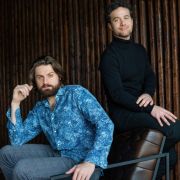
The opera is based on a surreal short story by Karen Russell, to a libretto by Mazzoli’s frequent collaborator Royce Vavrek (Breaking the Waves, Songs from the Uproar, The Listeners). It opens with the head of the family, Johannes “Pa” Zegner – who works hard, but drinks harder – singing a burst of Uncle Sam’s Farm, a 19th-century song by Jesse Hutchinson, Jr. But Mazzoli twists the tune as the score darkens and the opera progresses, turning dry, almost spectral in its orchestration; wheezing harmonicas, the rattle of a harpsichord, scratching, hammering, a groaning double bass. A muted trumpet gives a fleeting impression of Aaron Copland and wide open prairies. There’s music in Vavrek’s memorable libretto too; lines such as “eager for the crystal risk of riding at a gallop” and “the yellow stitching of the sky goes dark”.

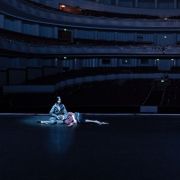
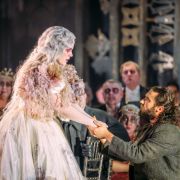
Amy Lane directs an intimate staging in the compact Milton Court Theatre, where all seven characters are on stage all the time; sometimes turning to face the set when not part of the action. Anna Yates’ simple stage design has backdrop panels with photographs of ‘soddies’ overprinted with the 1862 bill.
There is an empty window frame in the central panel – for the window is key here. Glass was an expensive commodity and so enterprising homesteaders sometimes rented a single portable glass window. They would briefly install it for the visit of the government land inspectors and then, in a neighbourly gesture, move it to the next claimant.


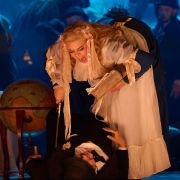
Lane keeps a tight grip on the action, turning the screw as Miles, the youngest son, undertakes a brave journey to deliver the glass to the next claimant, a quest that goes badly awry. Toby Ison’s brilliant lighting traps him in a tight net of beams as the glass window becomes a mirror, reflecting a dark history that eventually comes back to haunt the Zegners.
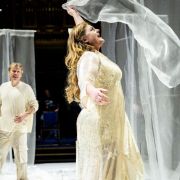
The Guildhall cast was led by baritone Twm Tegid and soprano Lowri Probert as Pa and Ma Zegner, both powerful voices and charismatic actors. Sebastian Hill displayed a pleasing lyric tenor as Miles, caught up in the deceit. Miranda Kettlewell and Laura LeVoir excelled as the two Zegner girls – you soon realise they are both spectres risen from the grave, their dresses caked in earth – who provide additional commentary. Aidan O’Donnell’s bass-baritone withstood the treacherous range of tessitura Mazzoli throws at the mysterious ‘Sodbuster’ character.

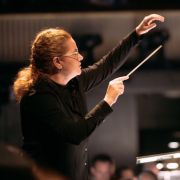
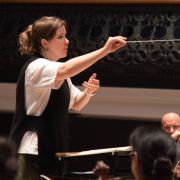
With James Henshaw drawing vivid playing from the small orchestra of 13 players, this is a staging that draws you into Mazzoli and Vavrek’s intense, surreal, spectral world.