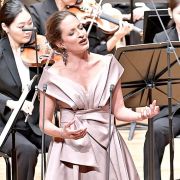
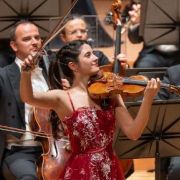
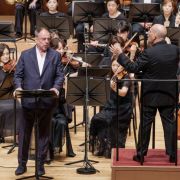
At Seoul Arts Center, the evening opened with the Chasse Royale et Orage (Royal Hunt and Storm) from Berlioz's opera Les Troyens, which functioned as a transient shift in atmosphere. The horn writing sketched the hunt with clipped focus, low strings and timpani adding pressure while keeping the texture breathable. Ludovic Morlot let the gusts surge and clear without theatrical underlining, the scene registering as pure orchestral motion – a squall that passed leaving no residue.

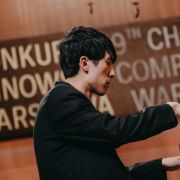
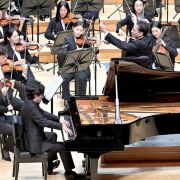
Chopin's Piano Concerto no. 1 in E minor followed. Nikolai Lugansky approaching the score as rhetoric rather than romance. After the long orchestral introduction he entered with a firm, almost dry attack and short pedal, keeping the harmony clear. The Allegro maestoso moved at a steady forward tempo; passagework stayed even and, despite pockets of rubato, grounded in a tight pulse – definition over sparkle. In the development Lugansky stressed line and structure while Morlot lightened the accompaniment and set in the woodwind replies neatly. This transparency was striking but also left the broad lyrical spans slightly reserved, ardour narrated rather than confessed. The E major second subject flowed in long, lightly inflected phrases, rubato grazing the ends of lines and keeping the overall temperature cool.


In the Romanze–Larghetto, Lugansky's harmonic legato proved more persuasive, the melody sustained by overlapping after-resonance and ornaments melting into the line. The Seoul Philharmonic Orchestra answered in half-voice, conversational yet distant. It felt less like a serenade projected outward than an entry into a vacated room, sitting in the unlit quiet where absence itself does the talking. The Krakowiak finale returned to precision. Passagework glittered, off-beats landed with clipped clarity and the dance's sideways swing was kept on a short leash. Now and then the soloist's flexible phrasing and Morlot's steadier grid met at a slight angle, but the closing acceleration gathered the triplet rush into one long curve; only there did the dance finally lift off.

After the interval, Schumann's Second Symphony made this aesthetic feel less like restraint and more like purpose. The opening brass motto stood firm without bluster, while strings moved beneath in flowing counterlines, clean enough to dispel the old cliché of Schumannian murk. Dotted rhythms were disciplined without turning hard-edged; drama came from harmonic pressure and long-span direction. The Scherzo's semiquaver drive ran with striking unanimity; the first Trio stayed a shade straight-faced, but the second let the woodwinds braid their polyphony cleanly, the counterpoint tipping its hat to Bach without announcing the debt.


The Adagio refused to let sorrow congeal. Here the woodwinds were warmth breathed onto a winter pane: a bloom of human heat on cold glass, dissipating almost instantly into clear air. Morlot kept the line moving, shaping calibrated retreats without losing pulse; a horn diminuendo folded the air with rare tact. The Finale released what had been stored without striking a victory pose; rhythmic profiles stayed incisive, and C major arrived as the steadied breath of convalescence – unassuming in gesture, quietly persuasive in effect.