At Lotte Concert Hall, Yunchan Lim’s self-conceived Mozart project opened with poise and nerve. With Masato Suzuki and Camerata Salzburg, he set three 1786 works in one arc: the Piano Concertos 25 and 24, separated by the concert aria Ch’io mi scordi di te? Lim’s coming sonata cycle may disclose a solitary Mozart. Here the first statement crossed concerto, scena and concerto, three different waters caught the same moon. Ceremony, theatre and C minor gravity kept distinct surfaces; the light held steady. Lim’s Mozart sounded newly claimed, young in risk but old in listening.

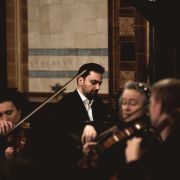
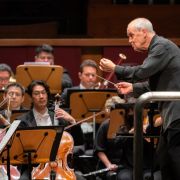
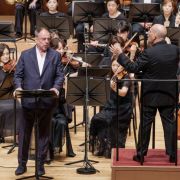
Suzuki supplied clean pressure. Camerata Salzburg played with clipped discipline and a lean, lightly grained sonority, vibrato rationed as colour. Winds held profile, but Lotte’s bloom sometimes softened their replies behind figuration; trumpets and timpani gave the C major K.503 its festive spine. The fabric was tidy and resilient; climaxes arrived maestoso, without varnish.


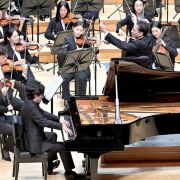
Lim’s first entry compressed the scale and sharpened the ear. His attack had a clear consonant, never a knock; each note carried a firm fundamental and a fine after-ring. Runs followed harmonic direction, trills charged the line and suspensions leaned toward release with inward pull. In the Andante, his legato grew from finger pressure, release and listening to decay, with pedal used as breath. Wind replies gained weight; Lim’s ornaments answered as inflection, his cantabile holding time at the edge of breathing.
Boldness lay in refusing to enlarge by weight alone. K.503 can invite a broad, public manner. Lim made its grandeur porous, tuttis and solo phrases exchanging at chamber proximity. C major gained a vulnerable underside, and the finale smiled through exactness: small agogic turns around rondo returns and wind answers, eyes, breath and full-score awareness drawing the orchestra into his arc.

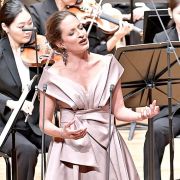
Ch'io mi scordi di te? became the concert’s hinge. Sunhae Im sang with poise and textual care, her broadest peaks less free than her diction. Beside a voice, Lim’s pianistic singing acquired sharper definition. He widened the keyboard’s role from obbligato brilliance to continuo-like agency. From the opening, he touched the orchestral fabric from below, recalling a practice in which the keyboard player stood inside the ensemble’s breath. When the written piano line came forward, it belonged to the scene. Basses were discreet, inner figures alert, chords falling like altered moonlight under speech.


The C minor concerto then showed the night inside the same reflection and became the evening’s summit. Suzuki kept the opening tight and mobile, woodwinds as protagonists. Lim’s left hand made harmony physically legible: weighted with consequence rather than heaviness. The soft playing mattered just as much; pianissimi carried core and cadential rests kept the line under pressure. The first movement exposed a grave interior without forcing pathos. Even Lim’s cadenzas answered to one imagination: in K.503 the moonlight had turned through a cooler, more oblique angle; in K.491 that same light sank deeper and returned with sterner authority. In the Larghetto, song gave shape to the span. The finale surpassed everything before it. Variations tightened until the 6/8 turn felt like motion after consolation had thinned, and the return to the minor arrived with austere composure. Applause broke almost before the resonance had cleared, but it could not disperse the grave weight it had left in the ear. The moon had not changed. The water had darkened.
This concert was promoted by MOC Productions