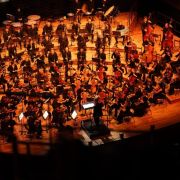
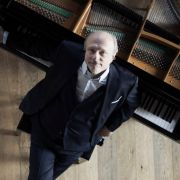
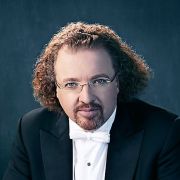
Paris got its first look at Tarmo Peltokoski as a Music Director on Tuesday and the performances were nearly as interesting as the billing. Peltokoski – 25, Finnish and already music director of two major orchestras on two continents – was bringing the Orchestre National du Capitole de Toulouse to the Philharmonie for the first time as their new chief. Alongside him was Alexandre Kantorow who arrived having spent the last month leaving American audiences with the unsettling suspicion that other pianists may be wasting everyone's time.

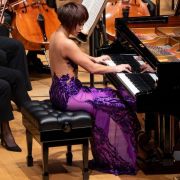
From the first chords of Beethoven’s Fourth Piano Concerto, mercurially bouncing off his hands into an orchestral hush, Kantorow's persona was familiar to anyone who had followed his American tour: a young man waking from a long sleep, discovering the music fresh in real time, in no apparent hurry, his occasional humming recalling Glenn Gould. The Allegro unfolded with silky strings and expressive woodwind swells, Kantorow occasionally letting the sound die until you could hear the piano frame resonate. He shook his mane during the big trills before the cadenza which though obviously intended to sound improvisatorial, did not quite convince. Peltokoski took the Andante aggressively sec and brutal, which Kantorow took as an introduction to spaced-out contemplation, adding an imaginative but ridiculous flourish before the orchestral return, then slow, slow, slow into a final broken chord, the whole thing landing with real weight despite itself. Kantorow had fun with the Rondo, emphasizing its sing-song triplets, once emerging from fast passagework into sudden staccato like a man finding an unexpected dance step. Alas, he came alive too late in the cadenza but was rescued by Peltokoski and the orchestra in the final stretch run. Scriabin's Vers la flamme and, after repeated entreaties, a Brahms Intermezzo sent the audience into intermission in love.


In Mahler's Sixth Symphony, the Toulouse orchestra were at the top of their form. Away from their acoustically unrewarding home hall, they emerged as one of France's finest, if not quite in the same bracket as the Orchestre de Paris. Peltokoski chose the Scherzo-Andante ordering of the middle movements, favored by the old Mahlerian guard from van Beinum onwards, although Rattle in Munich and Petrenko in Berlin persist in what seems to have been Mahler's real intention. It suited Peltokoski’s brutish view of the score: delay the emotional consolation, maximize the mindless punishment. Admirable conviction, if arguably misplaced, and it can't be denied that Mahler, who tried to cram every instrument known to mankind into the score – including untuned cowbells, hammer, rute, four harps if possible – invites this kind of all-in commitment.

Throughout the endless Mahlerian landscape, Peltokoski often stood legs apart, braced against the violence, determined to make every point and preferably punch it home. The Allegro's angry cellos and basses, rasping as if playing on sandpaper strings, set a combative tone. The Scherzo's Trio was animated by its farmyard's worth of clucking; the cowbells disappointingly indistinct. The Andante's horn solo was genuinely moving, a reminder of what this conductor can do when he stops insisting, and a reflection of the orchestra's nine glorious French horns. The finale's hammer arrived as more dull than mighty, though Peltokoski avoided the over-homogenized approach that has made certain celebrated recordings feel embalmed, and the double basses sawed away at the close with collective satisfaction.


A qualified success then; two prodigies navigating enormous repertoire with a surplus of imagination and more interest in the moment than in creating long arcs of music, in a remarkable hall that suits both Mahler's scale and Beethoven's intimacy before an audience entirely willing to be convinced.