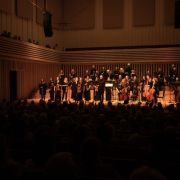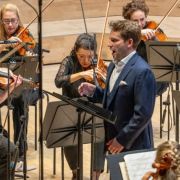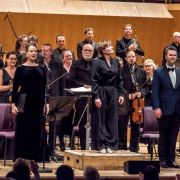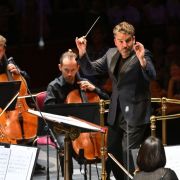


There was a distinctly seasonal feel to Chloé Van Soeterstède’s latest programme with the Ulster Orchestra, moving from the freshness of spring through the warmth of summer before culminating in the grandeur of Saint-Saëns’ magnificent Third Symphony. With mezzo-soprano Niamh O’Sullivan as soloist in Berlioz’s Les Nuits d’été, and the imposing Mulholland Organ taking centre stage in the symphony, there was much to enjoy, even if the evening occasionally lacked a little warmth and spontaneity.

Lili Boulanger’s D’un matin de printemps was full of vigour. Van Soeterstède relished the darker moments of this miniature, drawing crisp and articulate playing from the orchestra. Occasionally, the brass were a tad punchy in the Ulster Hall’s crystal-clear acoustics, while Leader Oscar Perks was particularly impressive in the solo passages. Van Soeterstède carefully paced the conclusion, allowing waves of sound to build and ebb through the crescendos without ever becoming unduly overpowering.


Continuing the seasonal theme, spring turned to summer as O’Sullivan joined the orchestra for Les Nuits d’été. Villanelle immediately brought radiant sunshine to an otherwise drab Belfast evening. O’Sullivan’s mezzo-soprano was rich and mellow, projecting confidently over the orchestral accompaniment. What was lacking, however, was diction. Despite the beauty and projection of her voice, the absence of clearly articulated consonants was noticeable from the rear of the hall. Given her numerous interpretations of Carmen, this was a little disappointing. The songs that followed became increasingly operatic, allowing O’Sullivan to demonstrate what a strong communicator she can be. Le Spectre de la rose, Absence and Au cimetière were particular highlights. Throughout the cycle, however, the orchestra felt very much in the role of accompanist. While this was a pleasing performance, the chemistry between soloist and conductor felt somewhat cold, with little interaction between them. The absence of surtitles or printed translations may also have made the French texts less accessible to the audience.
The Mulholland Organ dominates the Ulster Hall, and now it was its turn to shine. Saint-Saëns’ Third Symphony has been performed many times in this hall, but van Soeterstède brought her own interpretation to this familiar work. The strings in the opening Adagio played without vibrato, creating a beautifully pure and ethereal sound. The relatively measured pacing gave way to a more urgent Allegro moderato, with the conductor effectively navigating the changing moods, from solemn grandeur to anxious energy. Once again, the brass occasionally overpowered the strings, perhaps exacerbated by slightly lean string sections. Some woodwind intonation issues, particularly between the flutes, also blemished the movement.


The frenetic atmosphere dissipated almost magically in the Poco adagio. Tristan Russcher introduced the organ delicately, underpinning the orchestra without dominating it. The vibrato-free strings were once again a thing of beauty, their secure intonation allowing the sound to float effortlessly.
The Allegro moderato of the second movement brought a complete change of mood. The smaller string body allowed the piano to cut through the texture, with pianist Dawn Hardwick doing a commendable job. As the organ announced the final section, Russcher and van Soeterstède filled the Ulster Hall magnificently. The sound radiated rather than blasted, capturing the majestic grandeur Saint-Saëns intended. The finale remained steady and measured to its triumphant conclusion.