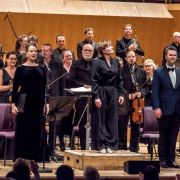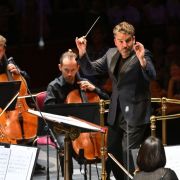


On a dark October evening, with leaves scattered across the ground and a half moon surrounded by a misty halo, the long, hot days of summer seemed a distant memory. Yet Manchester Camerata’s latest concert brought back all the feelings of summer, from the first note to the last. In a programme combining two of classical music’s most unusual symphonies with Vaughan Williams’ most popular work, the ensemble’s Music Director, Gábor Takács-Nagy, brought energy and poise to the evening.

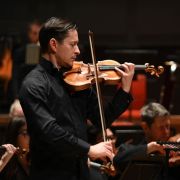
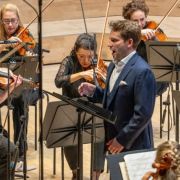
Takács-Nagy has addressed the audience at previous concerts, but tonight the microphone was handed to the players. Naomi Atherton (Principal Horn) gave a short introduction to the opening work, reading the poetry that had provided its inspiration. The Camerata’s leader, Caroline Pether, was the soloist in Vaughan Williams’ The Lark Ascending. The opening chord was balanced to perfection, with Takács-Nagy following Pether instinctively. Rubato was used to great effect. Although the orchestra was modestly proportioned, the chamber-like feel brought intimacy, and Takács-Nagy never pushed for a bigger sound. As Pether’s lark flew into the silent distance and the reverie came to an end, the piece somehow seemed not to beckon applause; it had said everything. Before the next work, Takács-Nagy commented regarding the audience’s reaction, highlighting one person in the front row had been moved to tears: “hopefully for the right reasons", he added with a huge smile.


Mozart’s three-movement "Prague" Symphony followed. Written in the Czech city between The Marriage of Figaro and Don Giovanni, this work is almost like an opera without words. Takács-Nagy asked the audience to imagine how each episode had its own character and to create their own narrative. The slow introduction to the first movement was full of drama, reminiscent of the overtures to Mozart’s greatest operas. The musical ideas were treated vocally, almost like the dialogues between characters in the exposition. The development became much darker and more intense, but these moments were fleeting, bringing a sense of vivacity to the entire movement. The central Andante had the character of a cavatina, with Takács-Nagy relishing the chromatic phrases, balancing them with more lyrical melodies, as in an aria, the character expressing their innermost thoughts and emotions. An urgent Presto brought the symphony to a close, with some strongly executed exchanges between the winds and strings.

After the interval, trumpeter Peter Wainwaring spoke knowledgeably about Beethoven’s "Pastoral" Symphony. Takács-Nagy, though, considered this work almost like another opera without words. The opening movement, ‘Awakening of cheerful feelings upon arrival in the countryside’, had a sense of wonderment, with rubato used in a similar way to the RVW that had begun the evening. ‘Scene by the brook’ was relaxed; unhurried, it never lingered or dragged, but simply took the listener merrily on a journey. ‘Merry gathering of country folk’ was crisp and vivacious, the staccato playing from the orchestra clean, precise and completely unified. There was only one word for ‘Thunder and storm’: terrifying. The ‘Shepherd’s song’ that followed was perhaps not quite as lilting as it might have been. The 6/8 metre was not felt quite so strongly, because of its forward momentum, but the joy that exuded from the music was infectious. Some of the audience were on their feet, and deservedly so; a brief recollection of the summer now over, reality resumed, and back into the cold night air.