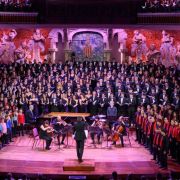
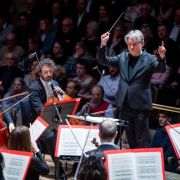
This current run of four performances of Beethoven’s Symphony No.9 in D Minor, “Choral” by the Toronto Symphony Orchestra under Music Director Gustavo Gimeno is grand in more ways than one. The orchestra and soloists are backed up by the 200-or-so strong Toronto Mendelssohn Choir, plus the final movement of the second performance will be live-streamed to Sankofa Square where the choir’s Artistic Director Jean Sébastien Vallée will conduct a massed choir in a “singalong” as part of the Luminato Festival.


But back to opening night. The first movement Allegro ma non troppo, un poco maestoso was just that. Gimeno took a measured approach; nothing breakneck about this, but there was plenty of drama and some real lyricism. The second movement Molto vivace was really dancelike, with bouncy rhythms balanced by theatricality. One got the impression that Gimeno had very clear ideas about what each movement was “about”, and the TSO consistently gave him what he wanted.
The third movement was taken at a fairly gentle pace but with great lyricism. There was some particularly fine playing here from the woodwinds and horns backed up by the strings. The soloists had entered the hall after the second movement, so Gimeno was able to launch straight into the fourth movement without a pause. Dramatic it was! There was bags of tension and then came the buildup to the Ode to Joy. The low strings were quite quiet and then the different sections joined in a very layered manner; almost more in the manner of some contemporary composers than the 1820s.
Finally the big brass fanfare announces the bass soloist and “O Freunde”. This was really interesting because Jongmin Park is a genuine bass, not a baritone, and there was something darker, less joyous, about his call for “more pleasing and joyful sounds”. Altogether a rather different take that was unusual, but I think it worked on its own terms.


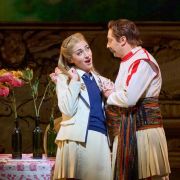
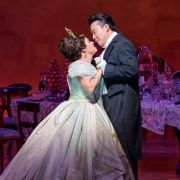
The Ode itself was properly impressive with all those voices. Tenor soloist Saimir Pirgu sounded excellent in the “Froh, wie seine Sonne fliegen” section with some ringing high notes. Soprano Golda Schutz and hometown favourite Ema Nikolovska rang out in the quartet section, just about audible over the choir. And that’s my one quibble about the performance. I wonder, especially given Roy Thomson Hall’s tricky acoustic, whether the soloists might have been better placed in front of the orchestra rather than up in the choir loft.
That aside, the conclusion “Seid umschlungen, Millionen” was majestic and a fitting conclusion to a very fine performance in the grand manner. A packed Roy Thomson went home very satisfied.