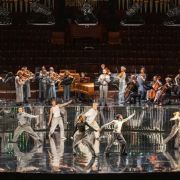
Sightings of Mozart’s racily titled Singspiel (a seraglio, or serail, was a Sultan’s harem) are rare as hens’ teeth nowadays, perhaps because it’s a comedy from the past that touches on tricky racial issues for the present. That’s unfortunate because Die Entführung aus dem Serail has one of the composer’s richest, most engaging scores. Still, the need for sensitivity is clear in an opera where two westerners, Belmonte and Pedrillo, attempt to rescue their equally western lovers from the hands of an Ottoman prince.

Directors who pussyfoot round the opera’s difficulties end up exacerbating them – especially when they’re ‘retold for the modern era’ – but here, thanks to a vibrant clutch of performances and abetted by designer Vicki Mortimer‘s detailed, exotic sets, director Sir David McVicar tells it straight, without fear or favour. In 2026, at its first revival in 11 years, the result was a triumph.


In Pasha Selim, a speaking role, it’s clear we’re watching an inherently good man transcend his ruthless culture and do what Mozart and subsequent generations of Western audiences would deem ‘the decent thing’. French actor Franck Saurel, who has played this role in every iteration of McVicar’s staging, hits the character’s conflicting tones of superiority, lust and compassion dead centre. The sight of this troubled man finding inner peace when he releases the woman he loves is immensely touching.

As Selim’s henchman, Osmin, Michael Mofidian bestrides the evening thanks to his easy command of both comedy and villainy. The ‘basso’ end of his bass-baritone timbre may be a trifle light but his character is fully rounded and his big introductory aria “Solche hergelaufne Laffen” resounded brilliantly. He formed a hilarious double-act with the fast-rising French soprano Julie Roset as Blonde, a feisty yet lyrical soprano whose career is destined to skyrocket.

Blonde’s companion in captivity, Konstanze, is beset by Selim’s advances and therefore can offer less by way of comic relief. She is, rather, a brave but unhappy woman who is distressed but not intimidated by her captor’s desire for her, and in Liv Redpath’s glowing interpretation her emotional dilemma seemed wholly truthful. Her great coloratura aria “Martern aller arten” landed with all its bells and whistles in place, yet the American soprano never lost touch with her character’s anguished soul.


Anthony Léon as Belmonte matched his inamorata in sensuous, aching-heart singing while Thomas Cilluffo as Pedrillo, beguiled by Blonde, rounded off a superb array of vocal talent, all masterfully managed by Evan Rogister. The stock of this sure-footed conductor rises at every encounter and the Orchestra of the Age of Enlightenment played like angels under his baton. In tandem with McVicar’s visually sumptuous production, the German-American conductor’s attention to musical variety and exotic beauty beguiled a rapt and eventually roaring Glyndebourne audience.