The evening opened with a striking contrast. Fire in My Mouth, by American composer Julia Wolfe, chronicles the tragedy of the 146 young women who perished in 1911 at the Triangle Shirtwaist Factory fire in New York. Mostly Jewish and Italian immigrants, they were trapped behind doors locked by management to deter unauthorised breaks. Wolfe translates their exploitation, defiance and struggle into an expansive musical monument.

Yet the voice that served as a prologue was unequivocally male: violist Roman Spitzer performed Igor Stravinsky’s five-minute Elegy for solo viola. A subdued, introspective lament, its con sordino timbre conjured a fragile, hushed solemnity. The choice was dramaturgically perplexing: a work by a female composer or a woman soloist would have fitted far more naturally into an evening explicitly dedicated to resurrecting silenced female voices.


There followed Wolfe’s 2019 score, originally commissioned by the New York Philharmonic and Jaap van Zweden. Its four movements were framed in this Dutch premiere by Anne Kauffman’s staging. Abstract seascapes, surging waves and archival sepia projections gave visual weight to the narrative. The direction remained austere, built around stylised gestures from the chorus. Effective, certainly, though in moments of heightened dramatic crisis one wished for a rawer, less sanitised theatrical approach. Wolfe’s music, too, occasionally veered toward the polished and cinematic.

In Immigration, five women clad in white shirts opened with the words 'Without passport'. The choir expanded to 35 singers; amplification was perceptible, yet judiciously balanced. The ensemble’s rhythmic chest-striking made a visceral impression, blending with five percussionists into a pulsating acoustic landscape. Wolfe ratcheted up tension through minimalist repetition and shifting registers; when the word “girls” emerged as an increasingly ominous refrain, a chill ran through the hall, laying bare the vulnerability of these young factory workers.

The most virtuosic movement was Factory. The strings mimicked the relentless clatter of sewing machines with such uncanny precision that the orchestra seemed transformed into an industrial floor. Against this mechanical rigor, Wolfe pitted a Jewish folk song and an Italian tarantella: the left choir moved with playful lightness, even as unsettling crosscurrents stirred in the orchestra beneath.


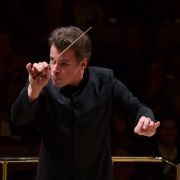
In Protest, the choral ranks swelled to nearly a hundred voices. The insistent refrain 'I want to dream like an American' fused with the historic rallying cries of labour organiser Clara Lemlich. Conductor Brad Lubman kept the intricate orchestral textures and choral polyphony in impeccable balance with the orchestra. Yet an essential element remained under wraps: while the young singers performed with admirable discipline, the visceral fury and spirit of rebellion inherent in the score remained too carefully contained.

In the final movement, Fire, the piece stripped away rhetorical flourish to confront the core tragedy. The recitation of all 146 names, intoned as the singers slowly raised their hands, became the most devastating moment of the evening. These were no longer statistical casualties of a disaster, but individuals whose lives deserve to be remembered, not least because they belong to a marginalized minority. The world still needs voices with fire in their mouths.