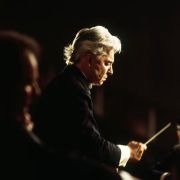
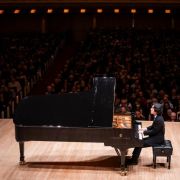
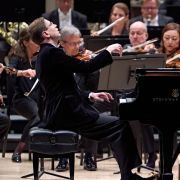
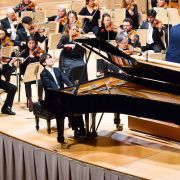
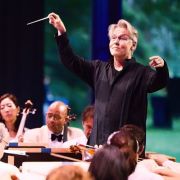
A French conductor, a French tenor and an evening devoted entirely to Berlioz: the concert by the Orchestra of St Luke’s at Carnegie Hall brought Louis Langrée and Benjamin Bernheim together for a programme that showcased the composer’s dramatic flair and lyrical imagination.

In the early overture to Les Francs-Juges, one could already hear the Berlioz to come. Langrée brought out the score’s theatrical contrasts and the young composer’s impatience with convention. He gave the brass an ominous weight and let some of the lighter passages unfold with Mozartian grace and Rossinian buoyancy.
For much of the audience, the main draw seemed to be the chance to hear Benjamin Bernheim in a rare New York appearance outside the Metropolitan Opera. Often heard in soprano and mezzo-soprano renderings, Les Nuits d’été took on a distinctive colour in his open, generously resonant tenor. He combined sensuality of tone with seamless legato and could sing with delicacy even in his gleaming upper register. His shifts in intensity felt spontaneous, as though prompted by the words.


The clarity of his diction kept Théophile Gautier’s Romantic verses in the foreground. Bernheim gave each expression of longing a character of its own. In Le Spectre de la rose, the ghost of the rose tells the young woman who wore it to the ball, “Soulève ta paupière close” (Lift your closed eyelid). In Sur les lagunes, Bernheim made the boatman’s grief palpable as he returned to the refrain “Que mon sort est amer!” (How bitter is my fate!). In Absence, the repeated “Reviens, reviens, ma bien-aimée” (Come back, come back, my beloved) had the directness and urgency of a plea. These were among the most moving songs, along with the quieter, deeply felt Au cimetière. Langrée provided pliant support, though the orchestra occasionally sounded too deferential. For his encore, Bernheim sang “Pourquoi me réveiller?” from Massenet’s Werther, giving the climaxes an operatic sweep while preserving the intimacy he had brought to Berlioz.

Langrée became a familiar figure to New York audiences during his two decades at the helm of the Mostly Mozart Festival, yet somehow he remains under-appreciated here. His elegance, energy and ear for instrumental colour served Berlioz well. Conducting the Symphonie fantastique from memory, he balanced the score’s extremes while maintaining a clear sense of direction.
The first movement began in a mood of yearning and uncertainty. Langrée made the transition into the Allegro feel completely natural, then sustained its momentum to the close. The harps gave the ballroom waltz a shimmer that carried through the orchestral texture. The dialogue between the onstage and offstage oboes lent the pastoral scene a quiet charm.


The Marche au supplice, though a tad rushed, had force and definition. In the finale, Langrée let the grotesque humour come through alongside the menace, and the OSL played with abandon while keeping Berlioz’s textures clear. Amid the symphony’s abrupt changes of mood, Langrée kept the idée fixe recognisable even as it turned into a parody of itself.

Berlioz’s scoring presents individual players with a multitude of opportunities, and Langrée let the St Luke’s musicians bring their own character to those passages. Jon Manasse’s clarinet caught the ear more than once. Although the reading may have offered few new interpretive insights, Langrée’s attention to detail and the conviction of the playing made a familiar score absorbing.